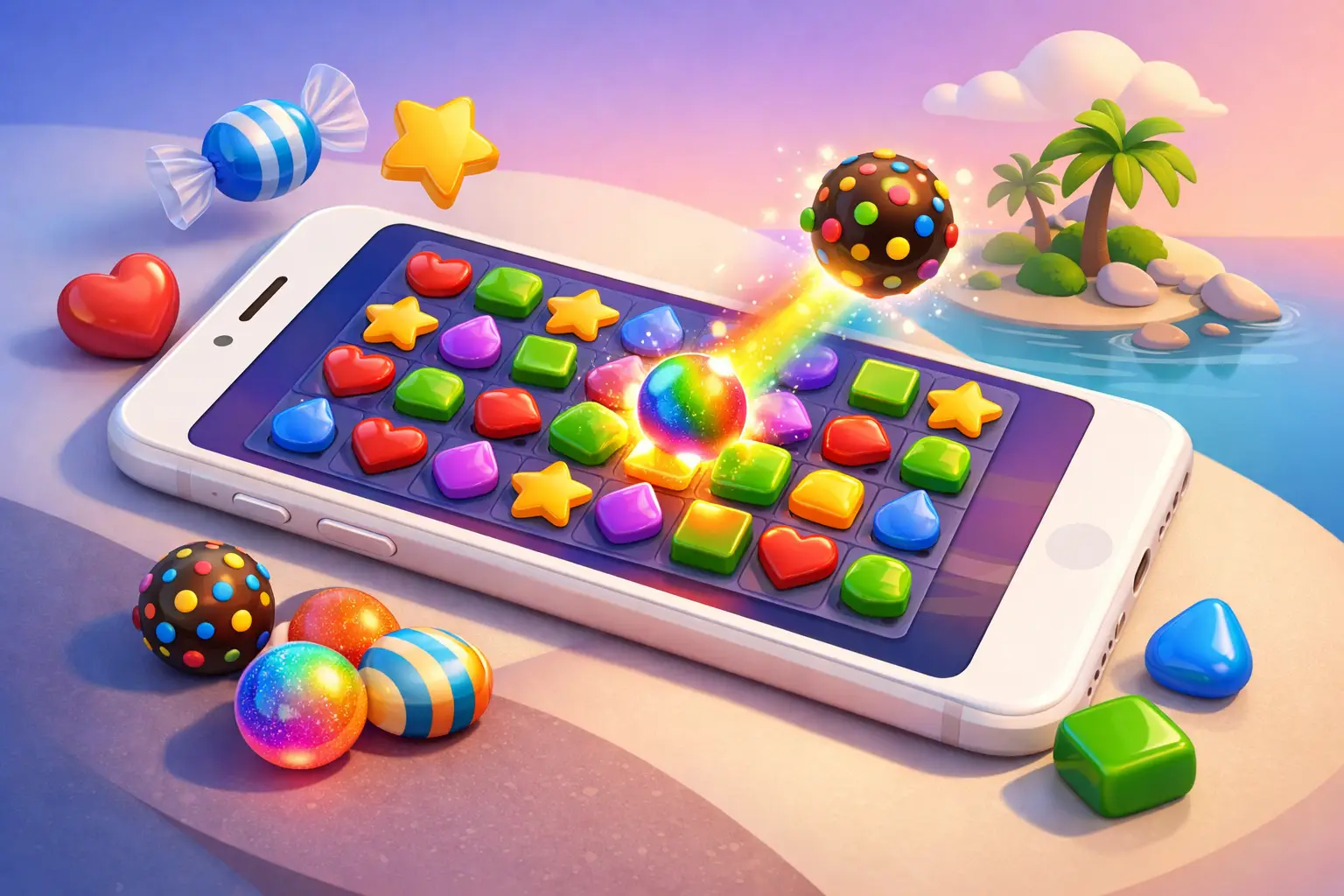
Some puzzle games ask for your full attention. The best ios match 3 games ask for ten quiet minutes and give something satisfying back.
That balance matters more than it used to. For a lot of players, match-3 is a daily ritual - a few levels with coffee, a quick session on the couch, maybe one more try before bed. When a game fits that rhythm, every swap feels amazing. When it doesn’t, even pretty visuals and flashy rewards start to feel like clutter.
What makes ios match 3 games worth keeping
A good match-3 game is easy to understand in seconds. You line up three pieces, clear the board, and work toward a level goal. That part should never feel confusing. The depth comes from what happens after that first minute: how the board opens up, how special pieces combine, how level goals change, and whether progress feels steady over time.
That is where many ios match 3 games separate into two groups. Some stay pleasant for a while but become repetitive once you have seen a handful of board layouts. Others keep finding new ways to surprise you without making the rules harder than they need to be. The strongest games understand that adult players are not looking for chaos. They want variety, a clear sense of progress, and a reason to come back tomorrow.
Visual design plays a bigger role than people sometimes admit. If you spend a few minutes a day in a puzzle game, you notice whether the colors are clean, whether the pieces are readable, and whether the effects feel rewarding instead of noisy. A polished match-3 game should feel calm even when the board gets busy. The animation should celebrate your move, not overwhelm it.
The best ios match 3 games feel fair
Fairness is not a small detail. It is often the difference between a game you keep installed for months and one you delete after a week.
In practical terms, fairness means a few things. The board should reward smart moves more often than random tapping. Difficulty should rise in a way that feels intentional, with tougher levels arriving like a change in season rather than a sudden wall. Boosters should be helpful, but regular play should still feel meaningful without leaning on them every few rounds.
Players notice this quickly, even if they do not describe it in those exact terms. You can feel when a level was designed by people who care about pacing. You can also feel when a game loses that balance and starts crowding the board with obstacles just to slow you down.
The best experiences trust the player. They let you learn patterns, improve your decisions, and enjoy visible progress. You cleared 12 levels on your lunch break. You finished a themed area. You added new blooms to a garden or filled out part of a collection. Those are modest rewards, but they add up to a hobby that feels restorative instead of draining.
Why progression matters as much as puzzle design
If all match-3 levels felt identical, even great mechanics would wear thin. Long-term progression is what gives the genre its staying power.
For some players, that means unlocking new level themes and mechanics at a steady pace. For others, it is the pleasure of building something alongside the puzzle layer - a garden, a decorative space, a set of collections, or a seasonal path with clear milestones. These systems work best when they support the puzzle experience instead of distracting from it.
That is the sweet spot many adults are looking for. You want enough progression to feel that your time is growing something. You do not want five overlapping systems demanding attention every time you open the app. The strongest ios match 3 games keep that balance tidy. A session can be short, but it still leaves behind evidence of progress.
This is also where theme matters. Cozy world-building is not just decoration. It gives context to the puzzle loop. A garden in bloom, a new patch of color, or a completed set of items can make a five-minute play session feel more complete. There is a gentle pleasure in seeing your choices accumulate.
The best fit depends on how you play
Not everyone wants the same kind of match-3 rhythm, and that is worth saying clearly.
If you like short, frequent sessions, look for a game with quick level restarts, readable goals, and progression you can see in a few minutes. The experience should be smooth on an iPhone screen and just as comfortable on an iPad when you have more time.
If you are a more experienced puzzle player, the details start to matter more. You may care about how often levels introduce fresh board shapes, whether special-piece combinations create real strategy, and how event modes change your priorities without turning the game into a chore. In that case, content volume matters, but so does curation. A thousand levels only feel exciting if the design keeps blooming instead of repeating itself.
If you mainly want a wind-down game, then tone becomes part of the product. Gentle art direction, rewarding sound design, and an interface that does not crowd every corner of the screen can make a real difference. People often talk about gameplay and monetization, but mood is just as important for a game that lives on your phone every day.
What to look for in ios match 3 games before you download
A store page can only tell you so much, but a few signs are useful.
First, pay attention to clarity. Can you tell what the pieces are at a glance? Do the goals look understandable? If the screenshots already feel busy, the game may feel busier once you are playing.
Second, look at the shape of progression. Is there a clear sense of what you are building, collecting, or unlocking? A match-3 game tends to last longer when each session contributes to something concrete.
Third, consider whether the game seems designed for real life. Many adults play in small pockets of downtime. A good game respects that. It should be easy to start, easy to stop, and rewarding even in short sessions.
Finally, think about whether the style matches your taste. Some players want bright spectacle. Others want something warmer and more grounded. There is no universal answer here. The right choice is the one that you will still enjoy after the first novelty wears off.
Why a smaller team can make a better puzzle game
Big production values are nice, but they are not the same thing as care. In match-3, careful design often shows up in smaller ways: level pacing that feels hand-shaped, features that support the core game instead of crowding it, and reward systems that make progress feel earned.
That is one reason independently developed games can be such a good fit for this genre. A smaller team is often more focused on the day-to-day player experience. When the design is centered on fair challenge, visible progress, and enjoyable sessions, the game feels more personal. You are not just clearing pieces. You are spending time in a space that has been thoughtfully tended.
Garden Match Puzzles is a good example of that approach. It keeps the heart of match-3 simple and satisfying, then layers in hand-crafted levels, garden building, collections, daily rewards, events, and light social play in a way that still feels easy to settle into. There is plenty to grow, but the board always stays at the center.
iOS match 3 games are at their best when they respect your time
That may be the clearest standard of all. A game can be colorful, generous, and full of content, but if every session feels noisy or overcomplicated, it stops being relaxing.
The best ios match 3 games understand that adults are not looking to be overwhelmed. They want a puzzle that starts fast, feels good in the hand, and leaves them a little farther along than they were before. Maybe that means finishing a tricky level on the train. Maybe it means adding a few new flowers to a garden after dinner. Maybe it is simply that small click of satisfaction when a smart move clears the board exactly the way you hoped.
That kind of pleasure is easy to underestimate because it looks simple from the outside. But simple is hard to do well. When a match-3 game gets it right, it becomes part of your routine for a reason. It gives you a pocket of order, color, and forward motion in the middle of an ordinary day.
If you are choosing your next puzzle game, look past the loudest promises and pay attention to how the experience feels after a week. The right one will keep blooming quietly, one satisfying move at a time.