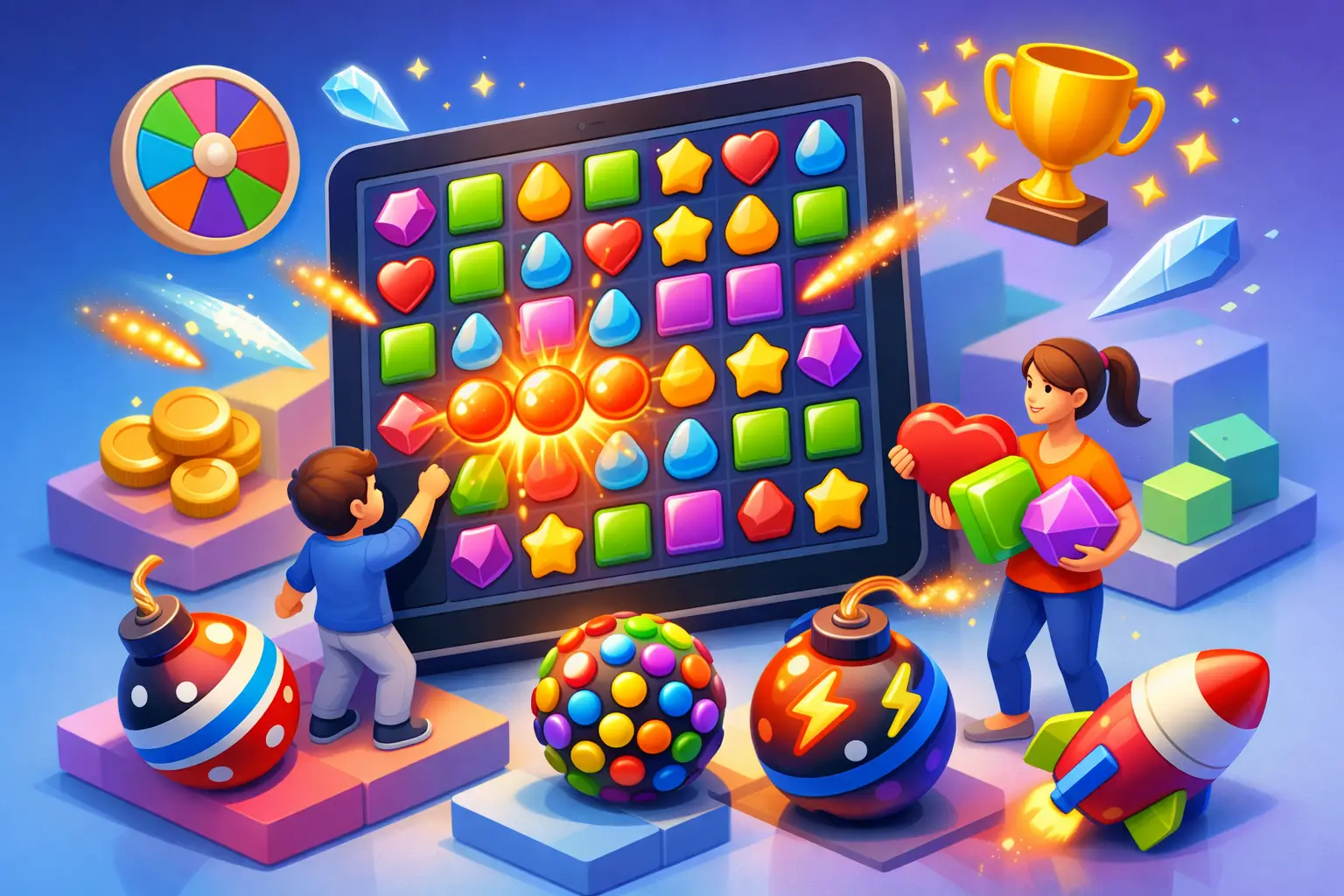
That almost-click moment is what makes match-3 games so satisfying. You spot three pieces, make the swap, watch the board light up, and suddenly one small move turns into a chain of clears, falling tiles, and bonus effects. If you're learning how to play match 3 games, the good news is that the basics are quick to pick up - and the fun grows fast once you start seeing the strategy behind every move.
Match-3 games are built around a simple idea: swap two adjacent pieces to line up at least three of the same kind. When three or more match, they disappear, new pieces drop in, and the board changes. That sounds easy because it is. What keeps players coming back is everything layered on top of that core loop - level goals, limited moves, blockers, boosters, combo creation, rewards, and the steady feeling of progress.
How to play match 3 games
At the start of most levels, you'll get a goal. You might need to collect a certain color, clear tiles under pieces, break obstacles, or bring special items to the bottom of the board. Your job is not just to make matches anywhere. Your job is to make matches that move you toward that specific goal.
That distinction matters. A random match can feel productive, but if it doesn't clear the blockers in your way or collect the pieces you need, it may waste a valuable move. The best players don't just react to the board. They read the objective first, then decide where each swap creates the most progress.
Most match-3 boards follow the same basic rules. You can usually swap only neighboring pieces, matches need at least three identical tiles, and bigger matches often create special pieces. Match four in a row and you may get a line-clearing power-up. Match five or create certain shapes and you may earn a stronger special tile that clears a larger area or removes one color from the board.
Once you understand that bigger matches create bigger rewards, the game opens up. Every board stops being a collection of random colors and starts feeling like a puzzle full of setup opportunities.
Start with the board, not the first move
A common beginner habit is making the first available match as soon as it appears. It feels active, but it often misses better options. Before you move, scan the full board for a few seconds. Look near blockers, near the bottom half of the board, and around pieces that are one move away from a four- or five-match.
Bottom-board moves are especially powerful because they change more of the board. When you clear pieces lower down, everything above them falls, which can create extra matches without spending another move. Top-board matches can still help, especially if they hit your objective, but lower matches tend to create more chaos in your favor.
This is also where patience pays off. Sometimes the strongest play is not the obvious match in front of you. It may be the setup move that creates a special piece on the next turn. Giving up one quick clear for a stronger follow-up is often worth it.
Know what special pieces are really for
Special pieces are not just flashy rewards. They're how you break difficult boards open.
A line-clearing piece is great for removing an entire row or column, which makes it useful against locked tiles, layered blockers, or hard-to-reach spaces. Area-clearing pieces help when the board is crowded or when you need to hit multiple nearby targets at once. Color-clearing specials can completely shift a level, especially when one tile color is tied closely to your objective.
The real excitement starts when you combine specials. In many match-3 games, swapping one special piece into another creates a much bigger effect than using them separately. That's often the difference between barely surviving a level and clearing half the board in one move.
There is a trade-off, though. Holding two specials for a combo can be smart, but waiting too long can also cost you if the board gets tighter or your move count drops. If a special solves an urgent problem now, use it. If the level gives you room to plan, save it for a stronger combination.
Match with the goal in mind
Every level teaches the same lesson in a different way: the objective matters more than the animation.
If you need to clear jelly, grass, dirt, ice, crates, or any other blocker, focus your matches where those obstacles sit. If you're collecting red flowers, leaves, apples, or other target pieces, prioritize moves that bring more of those pieces onto the board or remove surrounding clutter. If items need to fall to the bottom, clear directly under them whenever possible.
This sounds obvious, but it is where many lost moves happen. Players get distracted by easy matches on the safe side of the board while the actual problem remains untouched. A level can look busy and satisfying while making almost no real progress.
That is why strong match-3 play feels calm. You're not chasing every sparkle. You're choosing moves that actually matter.
How to play match 3 games better when levels get harder
As difficulty rises, levels start adding restrictions. You may have fewer moves, awkward board shapes, multi-layer blockers, separated sections, or pieces that don't drop normally. This is where strategy starts to matter more than speed.
First, use your opening moves to free the board. If blockers are preventing tiles from falling or cutting off entire sections, break those early. A more open board gives you more matching options and more chances for free cascades.
Second, identify the hardest space to reach and work on that before it becomes a late-game problem. Corners, isolated tiles, and narrow channels often look harmless early, then become the reason a level fails with one move left.
Third, protect your move count. In a hard level, every swap needs a purpose. That doesn't mean every move must be perfect. It means you should avoid low-impact matches that neither improve the board nor support the goal.
Boosters can help here, but smart timing matters. Using a booster at the start can be ideal if the board is heavily blocked and you need momentum. On the other hand, saving one for a near-win attempt can push you over the line. It depends on the level design, your objective, and whether the first few turns are likely to open things naturally.
The hidden skill: setting up cascades
Cascades are those beautiful chain reactions where one clear drops pieces into another clear, then another. They feel lucky, and sometimes they are, but good players create more of them on purpose.
The trick is to make moves that change multiple lanes at once. Clearing low on the board, opening blocked columns, and leaving near-matches in place can all increase the chance of a cascade. You're not controlling every tile, but you are shaping the board so more good things can happen after the initial swap.
This is one reason handcrafted level design feels so rewarding in polished games. The board is not just random noise. It gives you opportunities to spot patterns, plan a combo, and feel genuinely clever when the chain reaction lands.
When to slow down and when to play fast
Early levels are great for building rhythm. You can move quickly, learn what each special does, and get comfortable reading the board. Later on, slowing down becomes more valuable. One extra second of planning can save three wasted moves.
A good rule is simple: if the level is generous, play freely. If the level is tight, count the value of each move. There's no prize for rushing through a puzzle and getting stuck one tile short.
That balance is part of the charm. Match-3 games are easy to enter, but they keep rewarding better decision-making. Every swap feels relaxing at first, then more strategic as the challenge grows.
Why progression makes match-3 games stick
The best match-3 games don't stop at the puzzle board. They add rewards, collections, events, decorative upgrades, and reasons to come back tomorrow. That extra layer turns quick sessions into a hobby with momentum.
For players, this means learning the mechanics pays off over time. Better play leads to more wins, more rewards, and faster progress through worlds, events, and unlocks. In a game like Garden Match Puzzles, that progress can also feed into garden-building, daily goals, and shared play, so each level does more than fill a minute - it moves your whole experience forward.
That is why the genre stays so popular. It gives you instant satisfaction and long-term payoff in the same loop.
If you're just getting started, don't worry about playing perfectly. Read the level goal, look for bigger matches, use specials with intention, and trust that pattern recognition kicks in quickly. Before long, those scattered tiles start to tell a story - and every smart swap helps your next win bloom.