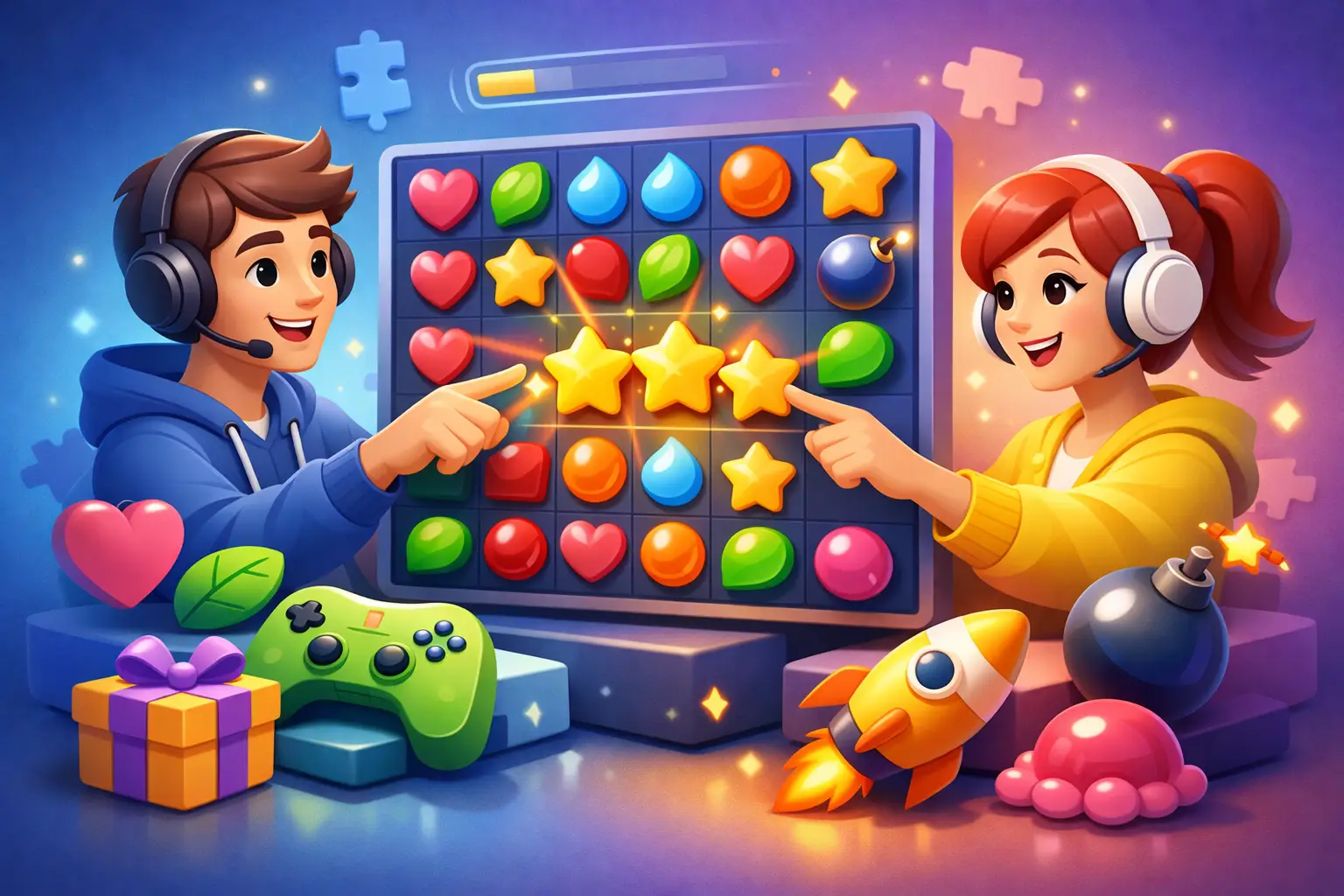
A great co-op match 3 game changes the feeling of every session. You are still making smart swaps, building combos, and chasing level goals, but now each win can help a team, unlock shared rewards, or move everyone closer to an event milestone. That small shift turns a relaxing puzzle habit into something more social, more motivating, and often more fun to stick with day after day.
For mobile players, that matters more than it used to. Plenty of puzzle games are easy to start, but not all of them stay interesting after the first burst of progress. Co-op features give match-3 gameplay a stronger reason to last. They add momentum without making the experience feel stressful, which is exactly the sweet spot many casual and mid-core players want.
What makes co-op match 3 different?
At its core, match-3 is simple for a reason. Swap pieces, create matches, clear obstacles, and use smart timing to trigger stronger combos. The appeal is immediate. Every move is readable, every board has a goal, and every victory feels earned.
Co-op match 3 adds another layer on top of that loop. Instead of playing in isolation, you contribute to a group through shared events, team challenges, lives, gifts, leaderboards, or collaborative progression. You still own your individual performance, but your play now has a ripple effect.
That changes player behavior in a good way. Solo progression is satisfying, but shared progression creates a stronger sense of purpose. When your next level attempt can help your club hit a reward tier or help friends stay active, logging in feels more meaningful.
Why co-op makes puzzle games more engaging
The best social features in a puzzle game do not get in the way of the puzzle. They support it. That distinction matters.
Some multiplayer systems can feel noisy or demanding, especially on mobile where most players want quick, low-friction sessions. Co-op works best when it gives you extra motivation without asking you to schedule your life around it. A well-designed system lets you jump in, make progress, help your team, collect rewards, and move on feeling like your time counted.
That is why co-op features fit match-3 so naturally. Puzzle sessions are already built around short bursts of play. Add team goals, seasonal events, and friendly competition, and those short bursts start stacking into long-term momentum. One level becomes five. A quick check-in becomes a daily routine.
There is also a psychological boost that solo play cannot always match. When other players are celebrating progress, climbing leaderboards, or working toward a shared unlock, your own progress feels brighter. You are not just clearing another board. You are contributing to something active.
The social systems that actually improve the experience
Not every social feature deserves equal credit. Some are decoration. Some genuinely improve retention and satisfaction.
Team-based events are one of the strongest examples. They create a clear reason to play now instead of later, especially when rewards are tied to collective milestones. Even if you are a relaxed player, it feels good to know your completed levels are helping everyone move forward.
Gift systems work well for a different reason. Sending and receiving lives or small resources lowers friction. That means fewer dead ends and more time actually playing. It also adds a light social touch without pressure. You can be helpful without turning a cozy puzzle game into a full-time commitment.
Leaderboards bring another kind of energy. Used well, they create a healthy sense of momentum rather than harsh competition. For this audience, the best leaderboards are motivating, not punishing. They give active players something to chase while still leaving room for newcomers and more casual fans to enjoy the ride.
Chat and team identity can matter too, but only if they stay simple. Most mobile puzzle players are not looking for endless coordination. They want a sense of belonging, maybe a place to celebrate a tough level win or event finish, and then they want to get back to the satisfying part - making great moves and watching the board light up.
Co-op match 3 works best when the core game is already strong
Social features can boost a weak puzzle game for a while, but they cannot fix one. If the levels feel repetitive, if the board design lacks variety, or if progress stalls too often, co-op becomes a distraction rather than a strength.
That is why handcrafted level design matters so much in this category. Players stay longer when each board asks for slightly different thinking, whether that means managing blockers, setting up cascades, or deciding when a booster is worth using. Co-op adds meaning to those decisions, but the decision-making itself has to feel good first.
The same goes for progression systems. A co-op match 3 game becomes much more satisfying when social play connects to larger goals like garden-building, decoration unlocks, collections, daily rewards, and timed events. That broader structure gives every session multiple paths to progress. Clear a level, help your team, earn event currency, and unlock something beautiful for your space - now the game feels rich without feeling complicated.
That balance is where games like Garden Match Puzzles have an edge. The puzzle loop stays approachable, while the surrounding systems give players more reasons to return, contribute, and personalize their progress.
The trade-off: social motivation vs. player pressure
Co-op sounds great, but there is one clear risk. If a game pushes team performance too hard, it can turn a relaxing genre into an obligation.
This is where design choices matter. A good co-op system gives players flexibility. You can contribute a lot during an event weekend, then play more casually the next week without feeling punished. Rewards should encourage participation, not create guilt.
There is also a difference between friendly accountability and pressure. A small nudge to help your team can be energizing. Constant alerts, harsh ranking drops, or systems that lock meaningful progress behind heavy social commitment can wear players out fast.
For a mobile audience that values cozy progression and daily wins, the best co-op experiences stay generous. They make players feel included at different activity levels. That keeps the community healthier and the game more welcoming over time.
How players get more out of co-op play
If you enjoy match-3 games but have not really used the social side before, the easiest place to start is simple consistency. Joining an active team and checking in during events often matters more than playing perfectly. Regular contributions add up.
It also helps to think strategically about when to spend boosters. In solo play, using a powerful tool might just save a level. In co-op, the same decision can help secure event points, complete a team objective, or keep your momentum going during a limited-time challenge. The value of a strong move gets bigger when shared rewards are in play.
Pay attention to event timing as well. Some days are better for focused progress, especially when rewards stack across systems. If a seasonal challenge, team competition, and personal progression track are all active at once, even a short session can feel extra productive.
Most importantly, choose a group that matches your style. Some teams are highly competitive. Others are more relaxed and reward steady participation. Neither is automatically better. It depends on whether you want a stronger push or a softer social layer around your gameplay.
Why this format has staying power
Co-op match 3 is not just a trend bolted onto a familiar genre. It fits because it extends what players already like about puzzle games. The boards are satisfying. The goals are clear. The sessions are easy to start. Social features simply give all of that more momentum.
For players, that means less of the usual mobile game drop-off. There is always another reason to come back, whether it is helping your team, collecting rewards, finishing a garden upgrade, or chasing a better event result. For designers, it creates a healthier long-term loop built on progress, variety, and community instead of pure repetition.
The smartest co-op puzzle games understand that together does not have to mean complicated. Sometimes it just means your next great move helps more than one person, and that is a pretty satisfying reason to play again tomorrow.