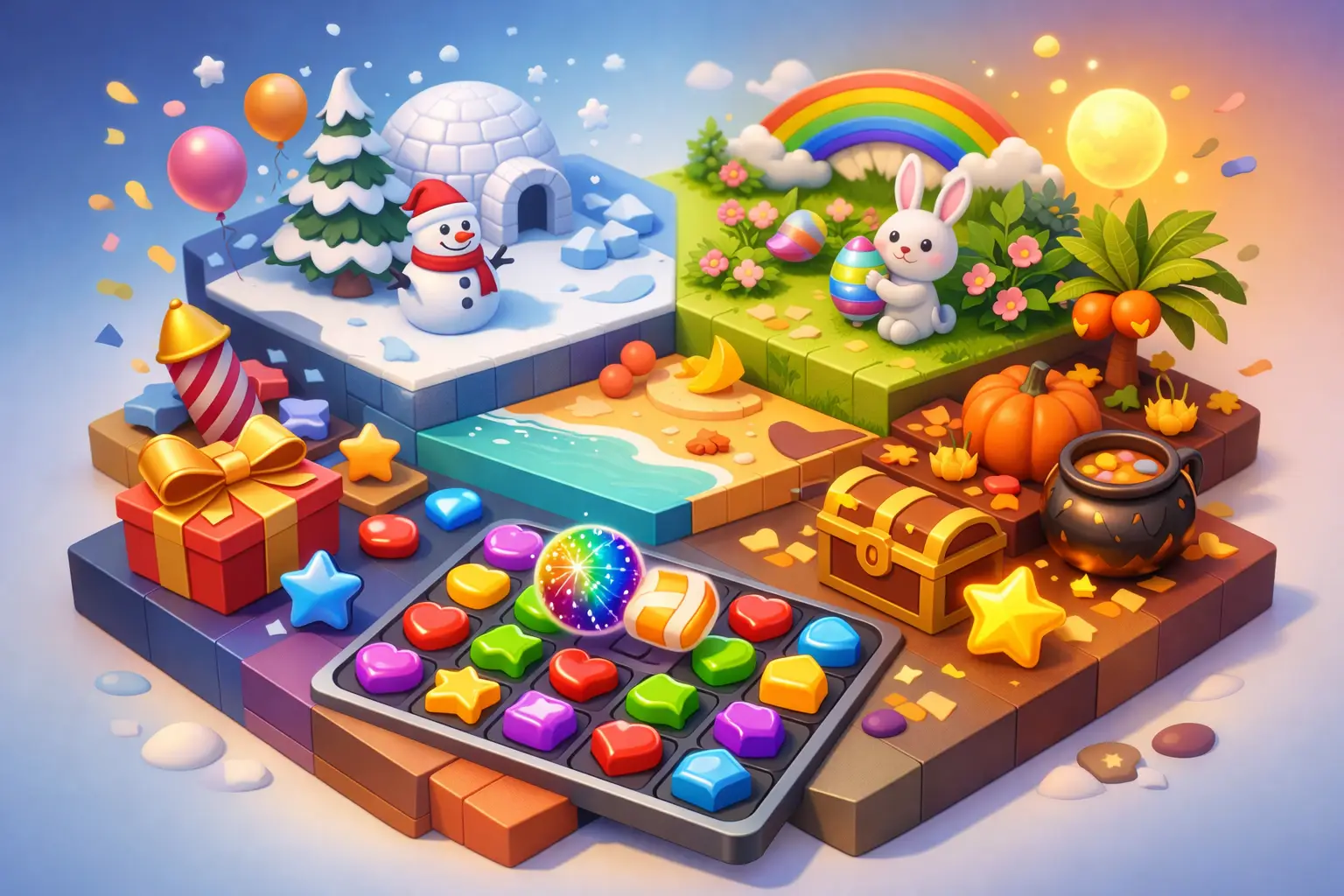
A good puzzle game earns its place on your home screen one quiet session at a time. You open it while the coffee brews, clear a few levels before bed, and slowly build something that feels like yours. That is why seasonal event puzzle games work so well when they are designed with care - they give familiar gameplay a fresh layer of purpose without asking you to relearn the game you already enjoy.
The best versions are not just costume changes. They create a rhythm. Autumn brings harvest collections and warm color palettes. Winter leans into snow-covered boards, gift tracks, and calm, bright visuals. Spring feels like a reset, with blooms, light goals, and a little more optimism built into every session. These shifts matter because puzzle players are not only chasing wins. They are also looking for variety, atmosphere, and a reason to come back tomorrow.
What seasonal event puzzle games do best
At their strongest, seasonal event puzzle games make ordinary progress feel more vivid. A level you might have played anyway now helps fill a flower cart, complete a postcard set, or decorate a garden corner for the season. The core loop stays recognizable, but the context changes, and that small change goes a long way.
For adults who play in short windows, that matters more than developers sometimes admit. Most people are not sitting down for a two-hour gaming session on a Tuesday night. They are fitting play into ten-minute stretches between errands, work, or winding down. Seasonal events give those short sessions shape. Instead of simply clearing three levels, you might also collect tulips for a spring display or earn tokens toward a themed reward path. Progress feels concrete.
There is also an emotional benefit. Seasonal content mirrors the real calendar, which helps a game feel present in your everyday life. When the world outside shifts from summer heat to crisp fall weather, seeing that same change reflected in your puzzle game makes it feel current and lived-in. It is a small touch, but it creates warmth.
Why seasonal event puzzle games feel fresher than standard updates
Not every content update lands the same way. New levels are essential, but on their own, they can blur together. Seasonal event puzzle games tend to stand out because they combine several forms of novelty at once: visual changes, limited-run objectives, themed rewards, and a different pacing structure.
That combination gives players more than one reason to care. Some will show up for the artwork. Others want a new collection to complete. Some enjoy the satisfaction of checking off milestones over a few days. A well-built event can support all of those play styles without making the game feel crowded.
This is where restraint matters. Too many side tasks can make a puzzle game feel busy instead of relaxing. Too few, and the event feels thin. The sweet spot is an event that adds texture without turning each session into admin work. You should be able to open the game, understand your current goal in a few seconds, and get right into play.
The design details players notice
Players may not always describe event design in technical terms, but they feel the difference immediately. A strong seasonal event starts with clear goals. If you need to collect lanterns, leaves, or ribbons, the path should be easy to understand. Good event design also makes rewards visible early, so each session has a satisfying sense of movement.
Board design matters too. Seasonal themes work best when they extend beyond menus and banners. Maybe a fall event brings acorn crates or pumpkin-shaped blockers that fit naturally into match-3 logic. Maybe a spring event uses lighter palettes and cleaner board layouts to create a breezier mood. These details do not need to be loud. They just need to feel intentional.
Pacing is another big one. A seasonal event should support different energy levels from the player. Some days you clear 15 levels and make real headway. Other days you just log in, take a few turns, and collect a small reward. Both sessions should feel worthwhile. That balance is what keeps an event inviting instead of demanding.
Seasonal themes work because they create memory
There is a reason people remember a favorite holiday event from a game months later. Seasonal content is easier to attach to memory than standard progression because it has a distinct mood. You may not remember level 438 in isolation, but you might remember the winter week when your garden filled with bright poinsettias and soft lights while you finished a cozy collection.
That kind of memory helps build long-term attachment. It turns a puzzle game from a utility into a hobby. The play still needs to feel good, of course. Every swap should be satisfying on its own. But seasonal structure gives those small moments a frame, and that frame helps them stick.
For games with decorative or collection features, the effect is even stronger. Earning a seasonal item and seeing it placed in your space creates a visible record of time spent. Your progress is not abstract. It blooms on the screen.
When events go too far
Seasonal content is not automatically good. Some events feel so overloaded with currencies, tabs, and bonus tracks that the puzzle game itself gets buried under the presentation. Others rely too heavily on pressure, making players feel behind if they miss a day or simply want a quieter week.
That approach misunderstands why many adults play casual puzzle games in the first place. For most people, this is a pocket of calm. A good event should enrich that calm, not compete with it. There is a real difference between motivation and pressure.
The strongest event systems respect different play styles. If you are someone who likes to play a little each day, progress should feel steady. If you prefer longer weekend sessions, that should work too. If an event only feels rewarding under one very specific habit, it is probably too rigid.
What to look for in the best seasonal event puzzle games
A worthwhile event usually gets four things right. First, the theme is distinct enough to feel special. Second, the rewards connect to play in a visible way, whether that means decorations, collections, boosters, or a progress track that clearly moves forward. Third, the event is easy to understand without a tutorial maze. Fourth, the underlying puzzle design still carries the experience.
That last point is easy to overlook. Seasonal polish can attract attention, but it cannot cover weak levels. If the boards feel repetitive or unfair, themed content only highlights the problem. The best seasonal event puzzle games start with satisfying puzzle mechanics and then build seasonal variety on top.
This is where an independent game can sometimes feel surprisingly refreshing. Without piling every possible system into the screen, it can focus on cleaner events, stronger readability, and rewards that feel pleasant rather than pushy. In Garden Match Puzzles, for example, seasonal content works best because it sits naturally alongside hand-crafted levels, garden-building, and daily progress instead of overwhelming them.
Why these events fit daily life so well
Seasonal puzzle events match the way many adults already play mobile games. They offer continuity without asking for total commitment. You can check in during breakfast, complete a few goals on the train, or play a longer session on Sunday afternoon and still feel connected to the event arc.
That flexibility matters. People want games that can brighten a routine, not dominate it. Seasonal content gives shape to repeat play while keeping each session approachable. It adds color to the week. It gives your progress a theme. It helps a familiar game stay lively across months instead of flattening into habit.
And maybe that is the real appeal. The best seasonal events do not just add more things to do. They make your existing play feel more meaningful. A few matched flowers become part of a spring collection. A steady evening session becomes a winter scene taking shape. Your garden gains a few new blooms, and the game meets you where you are.
If a puzzle game can do that consistently - offer fresh goals, calm rewards, and a sense that your time added up to something visible - it tends to stay planted on your phone for a long while.