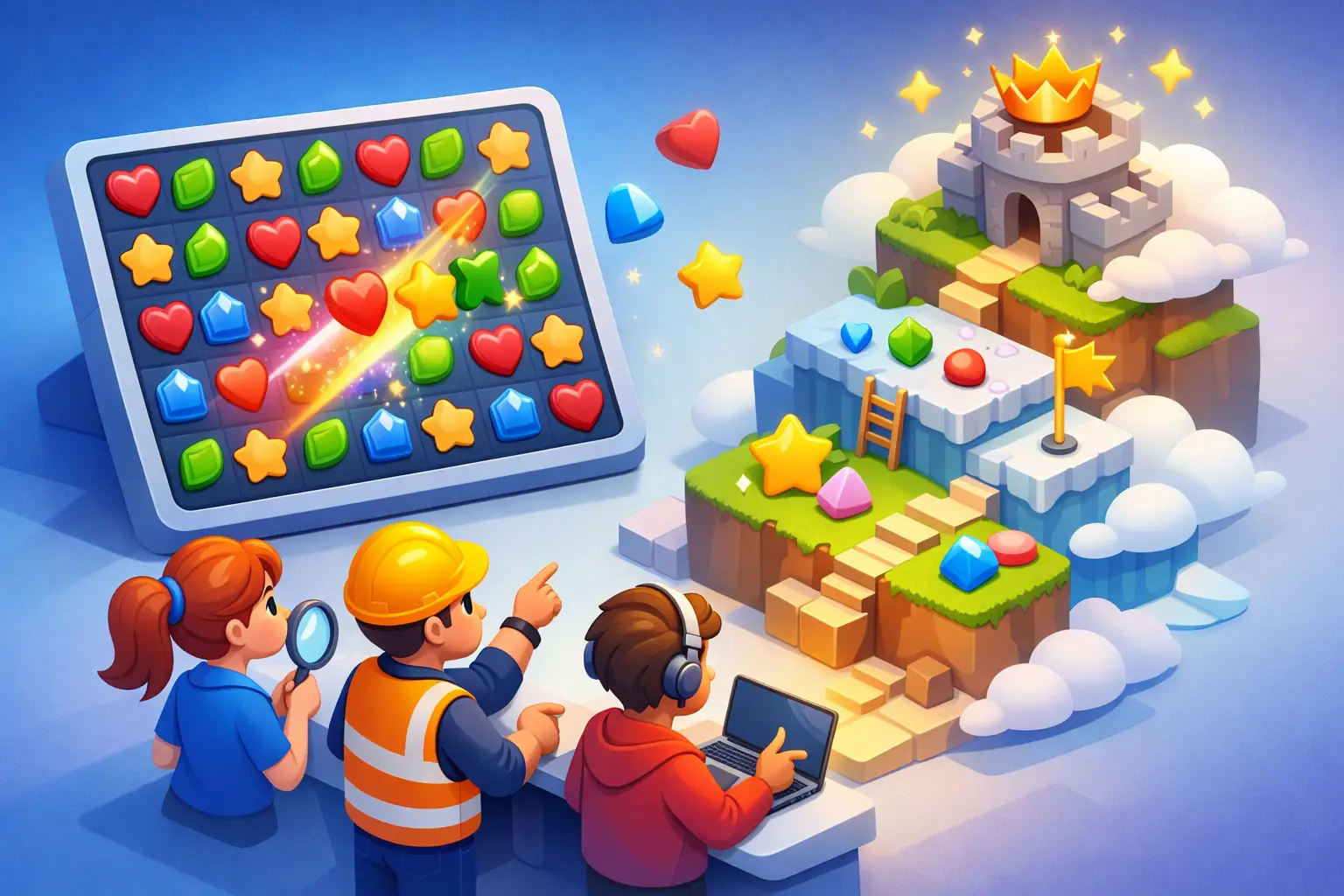
Some levels are easy wins. Others leave you one move short, staring at that last stubborn tile and thinking, if only you had a little backup. That is exactly where match 3 teams change the feel of the game. They turn a solo puzzle session into something more social, more rewarding, and often more motivating to come back to tomorrow.
For players who love the satisfying rhythm of swapping pieces, building combos, and watching a garden grow level by level, team play adds another layer of momentum. You still get the relaxing core loop that makes match-3 games so easy to pick up. But now your progress can support other players, and their progress can support you right back.
Why match 3 teams matter
A lot of puzzle games add social features as an extra tab you barely open. Good match 3 teams feel different. They are not there to distract from the puzzle gameplay. They make it feel more alive.
The biggest shift is simple: your wins start carrying more value. Beating a level is still satisfying on its own, but when that progress also helps a team event, contributes to a shared goal, or improves your place on a leaderboard, the reward loop gets stronger. Every session feels like it counts for something beyond the next star or the next patch of garden.
That matters because casual players do not always want pressure. Most people want a reason to keep playing, not a second job. The best team systems understand that balance. They give you light competition, shared rewards, and a sense of community without turning a cozy puzzle game into an intense grind.
What good match 3 teams actually add
At their best, teams create three things players already love: momentum, support, and variety.
Momentum comes from shared goals. If your team is pushing through a weekend event or collecting points for a group reward, you have a clear reason to jump in and play a few more rounds. Even a short session feels productive.
Support shows up in practical ways. In many match-3 games, team members can send lives, help each other recover from losing streaks, or contribute to event progress that benefits everyone. That softens frustration. One tough level does not feel like a wall when you are playing as part of a group.
Variety is the part players often underestimate. Solo progression is fun, but it can become routine over time. Team competitions, cooperative tasks, and social milestones keep the experience fresh without changing the core puzzle mechanics. You still get that familiar, satisfying swap-and-match gameplay. You just have more ways to enjoy it.
Match 3 teams work best when they stay accessible
Not every player joins a puzzle game looking for guild politics or strict participation rules. That is why the strongest team features in this genre stay easy to understand.
You should be able to join a team quickly, know what the current goal is, and start contributing without reading a long guide. The barrier to entry needs to stay low. If a feature feels confusing, many casual players will skip it, even if the rewards are good.
At the same time, simple does not have to mean shallow. A well-designed team system can still offer meaningful choices. Do you save boosters for a team event or use them to clear your next hard level? Do you join a highly active group for faster rewards, or pick a more relaxed team that matches your play style? Those choices give the feature depth without making it complicated.
That balance fits the appeal of modern mobile puzzle games. Players want progress that feels rich, but controls and goals that stay clear.
How team play changes your strategy
Playing solo often means thinking one level at a time. Playing with match 3 teams nudges you to think a little bigger.
You start looking at timing. If a team event is about to begin, it may make sense to hold onto certain resources, boosters, or extra lives until your progress will count toward both personal and team rewards. That does not mean every session has to become highly optimized. It just means the game gives you more interesting decisions.
You also become more aware of consistency. In solo play, a day off is just a day off. In team play, regular contribution can help everyone move forward. For many players, that creates a healthy kind of motivation. You are not logging in because you have to. You are logging in because it feels good to help your group hit the next milestone.
There is a trade-off, of course. Highly competitive teams can make casual play feel less casual. If a group expects daily activity or top-tier event performance, some players may find that energizing, while others may feel boxed in. The best fit depends on what you enjoy. Some players want to chase every reward. Others want a cozy team that shares lives and celebrates progress without pressure.
Choosing the right team for your play style
Not all teams feel the same, even in the same game. That is why joining the first open group is not always the best move.
If you play a few times a day and enjoy event ladders, an active team can make the game feel even more rewarding. Shared progress stacks up faster, milestone rewards arrive more often, and the social energy keeps things moving. You will likely get the most from timed competitions and group challenges.
If you play to relax at night or during breaks, a lower-pressure team may be a better match. You still get social benefits and occasional rewards, but without the feeling that every missed session hurts the group. For a lot of players, that is the sweet spot.
A good team match comes down to rhythm. When your pace lines up with the group, everything feels smoother. When it does not, even generous rewards can feel less fun.
Why match 3 teams improve long-term play
The smartest thing about team systems is that they extend the life of a game without forcing new mechanics on the player. You already know how to swap, match, and create combos. Team play simply gives those actions more context.
That context matters over weeks and months. Garden-building, collections, events, and daily rewards already create reasons to return. Add team goals to that mix, and each session feels more connected. You are not just clearing another level. You are helping complete a team challenge, pushing toward a reward tier, or keeping a streak of progress alive.
For players who enjoy visible progress, this is a huge part of the appeal. You can see your own advancement and feel the shared momentum at the same time. That combination makes a match-3 game feel less like a quick distraction and more like an ongoing hobby.
It also makes wins more memorable. A great combo is satisfying for a second. A great combo that helps your team cross a reward threshold feels satisfying for longer.
Social play without the noise
One reason puzzle fans gravitate toward this genre is that it stays approachable. You do not need voice chat, perfect reaction time, or a dedicated squad schedule. Match 3 teams keep the social side light.
That is a real advantage. You get the benefits of playing together without the friction that comes with more demanding multiplayer games. The mood stays upbeat. The interaction stays easy. And the puzzle-first experience remains front and center.
When team systems are designed well, they make the game feel warmer. More celebratory. More alive. A cheerful game like Garden Match Puzzles benefits from that because the social layer supports the core fantasy instead of competing with it. Growing your space, beating handcrafted levels, and collecting rewards all feel better when shared.
The best team feature is simple: it makes you want one more level
That is the real test. A good team system does not pull you away from the puzzle loop. It makes that loop more exciting. One more level means one more chance to help your team. One more combo means one more step toward a shared reward. One more login means you are part of something active and welcoming.
For some players, match 3 teams are all about extra lives and event prizes. For others, they are the reason a game keeps its spark after the first hundred levels. Both are valid. The feature works because it adds value at different levels of commitment.
If you enjoy puzzle games that feel cozy, rewarding, and full of progress, team play is not just a bonus. It is one of the clearest ways a great match-3 game turns everyday sessions into something players genuinely look forward to. Find a team that fits your pace, keep matching, and let every level do a little more for you.