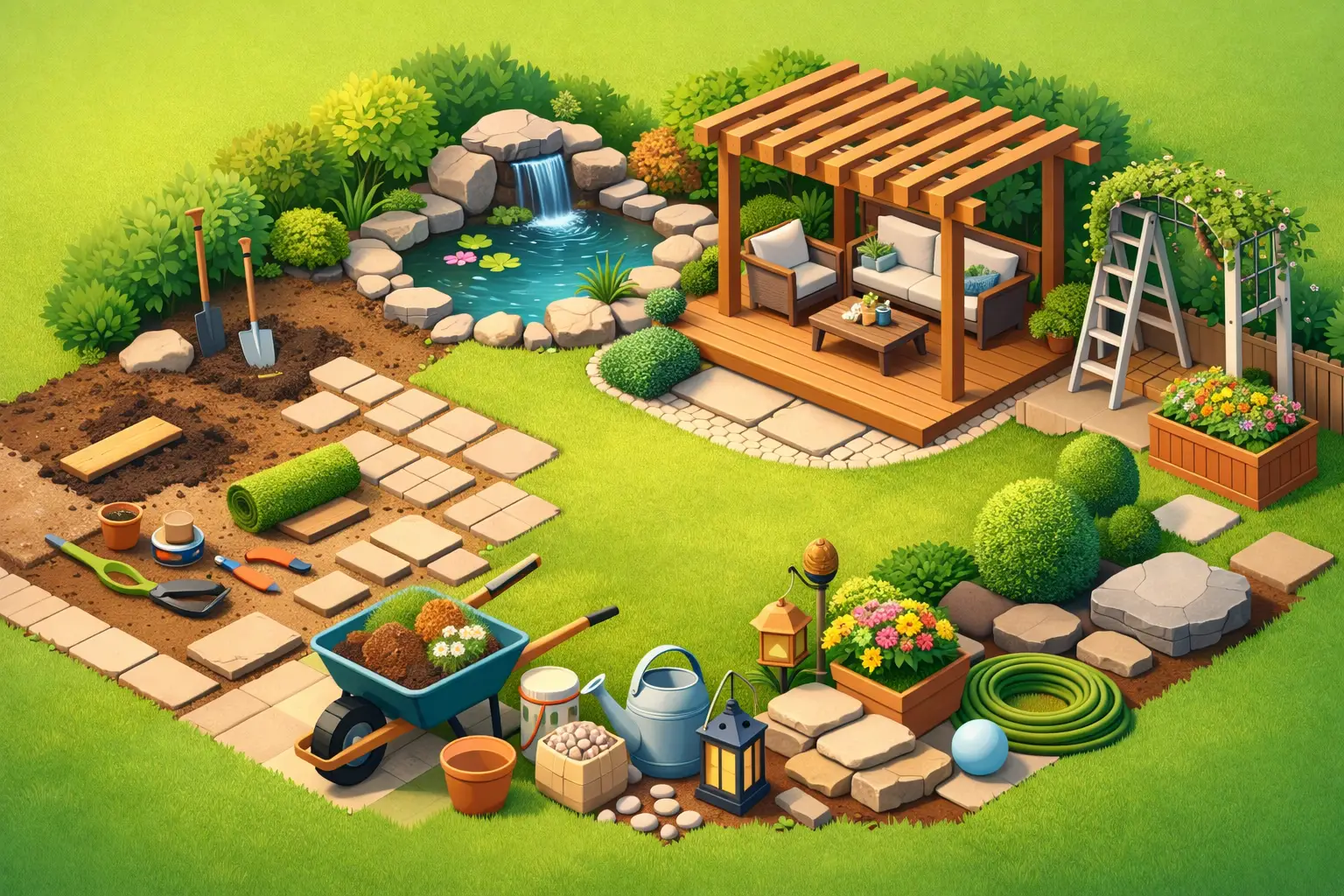
A garden rarely comes together in one grand weekend. More often, it grows into itself through small choices - a bench placed where the light stays soft in the evening, a path that finally makes the yard feel finished, a cluster of blooms that turns a plain corner into somewhere you want to linger. If you are figuring out how to decorate garden steadily, the real skill is not speed. It is learning how to make each change feel worthwhile on its own while still serving the bigger picture.
That approach tends to work best for busy adults because it fits real life. Most of us decorate in short sessions, between work, errands, and everything else. A steady method keeps the process relaxing instead of turning it into another project with too much pressure attached.
Why decorating steadily works better
When people try to finish a garden all at once, they usually run into the same problem: the early decisions are rushed. They buy too many pieces before they know how the space actually feels, or they focus on dramatic features before handling the details that make a garden usable.
A steadier pace gives you room to notice what the space needs. Maybe the patio already has enough visual interest, but the border beside the fence feels flat. Maybe you do not need another decorative planter yet - you need a clearer route from the back door to the seating area. Good decoration is not just about adding pretty things. It is about shaping mood, rhythm, and comfort.
There is also a practical benefit. Small upgrades are easier to evaluate. After each one, you can ask a simple question: did this make the garden nicer to spend time in? If the answer is yes, you are on the right path.
Start with one garden mood, not ten ideas
If you want to know how to decorate garden steadily without wasting time or money, begin by choosing a clear mood. Not a perfect design brief - just a direction. Calm and minimal. Lush and colorful. Cottage-inspired. Clean and modern. Relaxed and natural.
This matters because decoration adds up fast. A lantern, a painted pot, a patterned cushion, and a rustic sign may all look appealing on their own, but together they can compete instead of complementing each other. A garden feels more finished when the pieces seem to belong to the same season of thought.
Try to define your mood in three words. For example: soft, green, welcoming. Or bright, playful, layered. Those words become your filter. If a new item fits them, it probably belongs. If it does not, it might still be beautiful, but not for this space.
Choose your anchor area first
A whole yard can feel overwhelming, so pick one area to anchor the style. Usually that is the place you use most - a patio, porch, sitting corner, entry path, or small deck. Decorate that space first, then let the rest of the garden grow outward from it.
This creates momentum. One finished area does more for your enjoyment than five half-finished ones. It also helps you spot what should come next. Once the anchor area feels settled, bare spots elsewhere become easier to read.
Build the structure before the accents
People often think of decoration as the final layer, but in gardens, structure comes first. Before you add ornaments or decorative details, make sure the bones of the space feel clear.
That means looking at paths, edging, seating, planters, and focal points. A narrow gravel path can add more charm than three extra accessories. Matching planters can bring order to a space that already has plenty of plant life. A small bistro set can make an unused corner feel intentional.
If your budget or time is limited, prioritize the pieces that do two jobs at once. A bench adds function and style. A trellis creates height and visual rhythm. A large pot can define a transition between areas. These foundational choices help every later decoration look more deliberate.
Let plants do part of the decorating
It sounds obvious, but it is easy to forget. Plants are decoration too. In many gardens, the most effective visual upgrades come from adjusting shape, height, and repetition rather than adding more objects.
A row of the same container along a path feels polished. Repeating one flower color in several beds ties the whole space together. Mixing upright plants with trailing ones adds movement. If a garden feels unfinished, the issue is not always a lack of decor. Sometimes it just needs stronger planting patterns.
Work in layers, one small win at a time
The most satisfying gardens usually feel layered. You notice the larger shapes first, then the textures, then the little details that make the space personal. That is why a steady decorating rhythm works so well.
Start with the largest visual elements. Then add secondary pieces such as cushions, pots, small tables, or lighting. After that, bring in details like birdbaths, lanterns, wall decor, or seasonal touches. This order helps you avoid clutter because each layer has to earn its place.
A useful rhythm is to make one meaningful change at a time and live with it for a few days. Put down the outdoor rug. See how the area feels. Add two planters. Notice whether the corner feels balanced. Hang string lights. Check if the mood improves at dusk or if the effect feels too busy.
This pause matters. Gardens are living spaces, and they reveal themselves over time.
Use repetition to make progress look intentional
One of the easiest ways to decorate steadily and still get a cohesive result is repetition. Repeating materials, shapes, and colors gives even a slowly built garden a sense of design.
You do not need everything to match. In fact, a bit of variation usually feels warmer. But you do want recurring notes. Terracotta pots repeated across different zones. Black metal details that echo from fence hooks to chairs to lanterns. Lavender and white blooms appearing in several beds. These patterns make the garden feel connected, even if you added pieces over months instead of all at once.
This is especially helpful if you are decorating in phases. Repetition acts like a thread running through the whole space. It tells the eye that the garden is growing with purpose.
Know when a space needs calm, not more decor
There is a trade-off in every decorating project: adding personality versus preserving breathing room. Some corners need another layer. Others need you to stop.
If a space already has texture from plants, fencing, and furniture, too many decorative items can flatten the effect instead of enriching it. A garden should feel easy to look at. You want moments that catch the eye, but you also want places where the eye can rest.
A good test is distance. Stand back and look at the area from the house or gate. Can you clearly spot the focal point? Does the seating area still feel usable? Are there too many small items competing at the same height? If so, remove one or two things before adding anything new.
Steady decorating is not just about adding. It is about editing as you go.
Seasonal updates keep the garden feeling alive
Part of learning how to decorate garden steadily is accepting that the garden will never be finished in a static sense. That is not a flaw. It is one of the pleasures of it.
A few seasonal changes can refresh the space without requiring a full redesign. In spring, you might add lighter textiles and fresh container color. In summer, focus on outdoor dining touches or evening lighting. In fall, warmer tones and textured planters can shift the mood. Winter, depending on your climate, may call for evergreen structure, simple wreaths, or clean, minimal accents that keep the space from feeling bare.
These updates work best when the base design is already solid. Think of them as new blooms on a well-shaped plant, not a replacement for the plant itself.
Make the process enjoyable enough to continue
A garden you decorate steadily should feel rewarding at every stage. That means choosing updates you can actually enjoy now, not only after everything else is done.
If you have fifteen minutes, tidy one shelf of pots. If you have a free Saturday morning, style the seating area. If you want a low-effort upgrade with a high payoff, add lighting where you spend time after sunset. Progress counts even when it is small. One better corner changes how the whole garden feels.
This is where a thoughtful, game-like mindset can help. In Garden Match Puzzles, the pleasure comes from meaningful progress in small sessions, and real-world decorating often works the same way. You do not need to force a total transformation. A few smart moves, repeated consistently, can make the whole space bloom.
The best gardens are rarely the fastest-made ones. They are the ones that feel noticed, used, and gently improved over time - a chair moved into better light, a path made clearer, a once-empty corner now full of life.