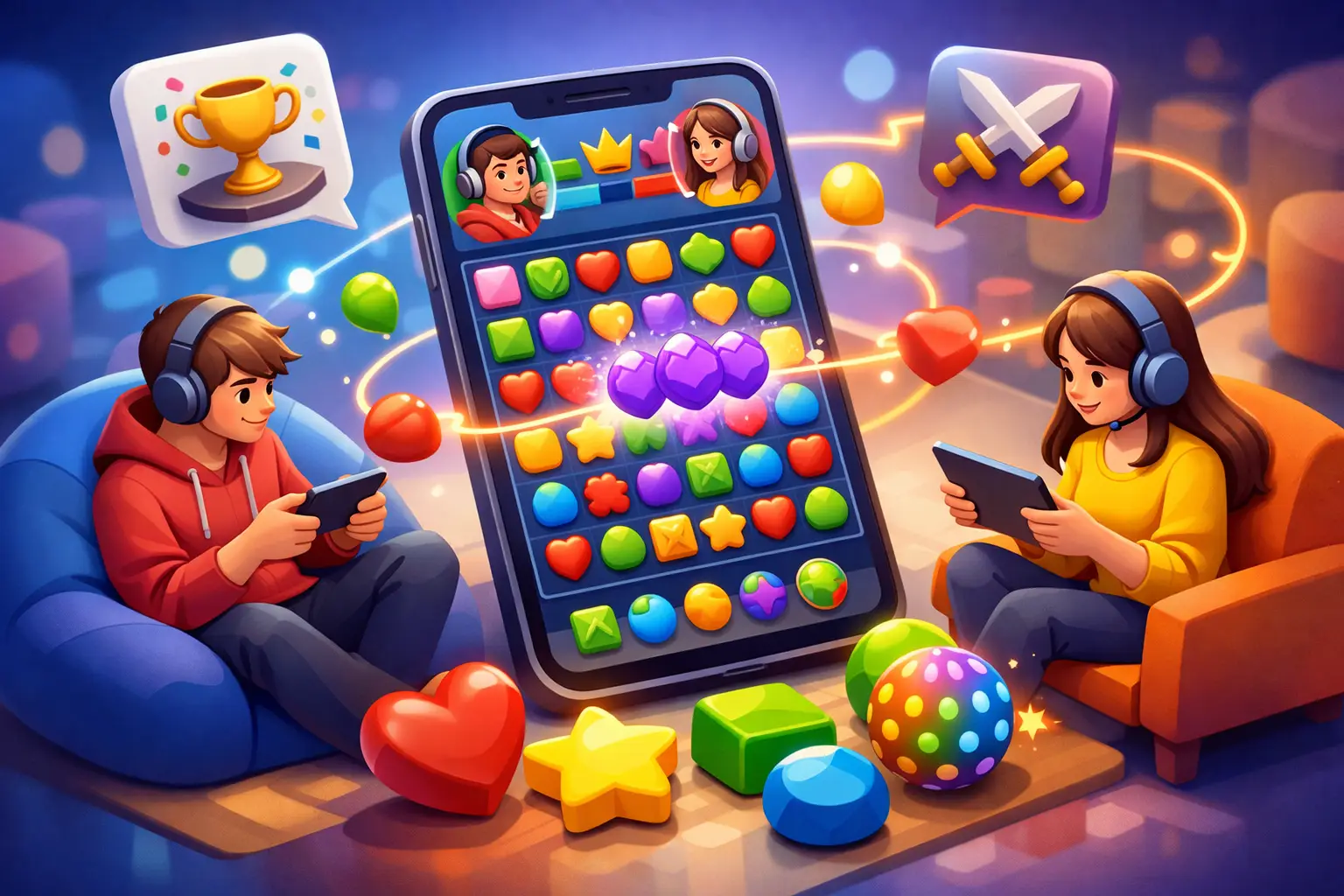
A great puzzle level can hold your attention for a few minutes. A great multiplayer match 3 game can hold it for months.
That difference comes down to more than swapping tiles faster or chasing a higher score. When social play is built into the experience, every level gains a little more energy. Your progress matters to your team. Event goals feel more exciting. A leaderboard gives each win a purpose. Suddenly, a familiar match-3 loop feels alive, rewarding, and full of momentum.
For players who want relaxing gameplay without losing that sense of progress, this is where the genre shines brightest. You still get the satisfying pop of every match, the strategy of setting up combos, and the calm rhythm of puzzle-solving. But now there is also connection, competition, and a reason to come back tomorrow.
What makes multiplayer match 3 different?
At its core, match-3 is beautifully simple. Swap pieces, line up three or more, clear objectives, and enjoy the chain reactions. That easy entry point is a huge part of the genre's staying power. But on its own, solo progression can eventually feel repetitive, especially for players who love goals beyond clearing one more board.
Multiplayer match 3 changes the emotional texture of the experience. It adds shared stakes. Instead of playing in isolation, you may be climbing a team leaderboard, contributing to a cooperative event, trading lives with friends, or racing other players through limited-time challenges. The puzzle mechanics remain approachable, but the context becomes much richer.
That matters because casual players often want two things at once. They want low-friction fun, and they want their time to feel meaningful. Social systems help bridge that gap. Even a short session can help your club hit a milestone, improve your ranking, or earn rewards that push your garden, collection, or event progress forward.
Why social play fits match-3 so well
Not every genre benefits from multiplayer in the same way. In fast action games, competition can become stressful. In strategy-heavy games, onboarding can feel intimidating. Match-3 sits in a sweet spot.
The mechanics are instantly readable, so adding team goals or head-to-head events usually does not make the game harder to understand. It simply gives each move more context. You are still making the same satisfying choices - whether to save a booster, whether to trigger a combo now, whether to play one more level before bed - but now those choices can affect more than your personal progress.
That is a big reason social puzzle games feel so inviting. They create community without demanding constant coordination. You can contribute at your own pace. Some players love competing for top spots. Others just want to send lives, join seasonal events, and enjoy the feeling of being part of something active. A strong multiplayer design makes room for both.
The best multiplayer match 3 features feel rewarding, not distracting
The trick is balance. Social features should add excitement, not clutter the experience.
When multiplayer systems work well, they support the main loop instead of pulling attention away from it. A team challenge should make your next level more meaningful. A leaderboard should create motivation, not pressure. A seasonal event should feel like a fresh layer of rewards, not homework.
This is where quality design really shows. The best games understand that puzzle satisfaction comes first. The social layer should amplify that feeling by turning wins into shared momentum. If every event is too noisy, too competitive, or too dependent on spending, players feel it quickly. If the game gives you clear goals, achievable rewards, and flexible ways to participate, the multiplayer experience feels energizing.
That balance is especially appealing in a cozy, progression-driven puzzle game. Decorating spaces, unlocking new worlds, collecting rewards, and seeing visible growth already create a strong reason to return. Add cooperative and competitive features on top, and the game starts to feel less like a disposable time-filler and more like an ongoing hobby.
Competition adds spark, but co-op builds loyalty
A lot of players hear multiplayer and immediately think versus modes. Those can be fun, especially when they are quick and accessible. Racing other players through event ladders or score-based rankings adds urgency to each session. It gives skilled play a visible payoff.
But cooperative features often do even more for long-term retention. Team play gives players a shared identity. Helping a group reach a reward chest or complete a milestone creates a different kind of satisfaction than simply beating someone else. It feels generous, collective, and motivating in a calmer way.
That distinction matters. Casual players do not always want the intensity of constant competition. Many want light social interaction that fits around their daily routine. Co-op systems are perfect for that. They let players contribute meaningfully without needing to be online at the same time or communicate constantly.
In a polished mobile experience, the strongest formula is usually a mix of both. Competition brings excitement. Co-op brings belonging. Together, they keep the game dynamic.
Progression is where multiplayer really pays off
Multiplayer systems are most powerful when they feed into broader progression. If social play only offers bragging rights, it can feel thin. If it connects to rewards players already care about, it becomes part of the main adventure.
That can mean earning boosters through team events, unlocking limited-time decorations, advancing a season pass, or collecting resources that support your next stretch of levels. It can also mean smaller daily wins, like extra lives or milestone rewards that keep the pace moving.
This is why modern match-3 games with strong live-service design feel so sticky. They do not rely on one reason to return. They stack motivations in a smart, friendly way. You want to beat the next level. You want to improve your event rank. You want to help your team. You want to claim your daily rewards. You want to see what opens next in your garden.
Each goal is simple. Together, they create momentum.
Strategy still matters in multiplayer match 3
Social play does not remove skill from the equation. If anything, it makes smart play feel more valuable.
In time-limited events or competitive ladders, efficient decision-making matters. Knowing when to build toward a power-up combo, when to prioritize the board objective over flashy clears, and when to use a booster can make a real difference. Even in cooperative modes, stronger play helps your team reach goals faster and earn better rewards.
That said, the best games keep this strategy accessible. You do not need a spreadsheet to enjoy the experience. You just need enough depth for improvement to feel satisfying. That is a major strength of match-3 done well. New players can have fun immediately, while experienced players can refine their approach and push higher.
For a game like Garden Match Puzzles, that blend is especially compelling. Handcrafted levels, layered progression, and social systems work best when every swap feels good on its own and meaningful over time.
What players should look for before they commit
Not every social puzzle game delivers the same quality. A few signs usually separate the ones that stay fun from the ones that burn out fast.
First, the core level design has to be strong. If the puzzles are repetitive, no amount of multiplayer sparkle will fix that. Second, rewards should feel steady and fair. Players want momentum, not a wall every few sessions. Third, social features should be easy to understand. Joining a team, helping friends, or entering an event should feel inviting from day one.
It also helps when the game offers variety beyond the board. Decoration systems, themed worlds, collections, and rotating events give social wins a place to land. When you earn something through team play and can immediately use it to build, unlock, or personalize your experience, the reward feels concrete.
That is the difference between a game you try and a game you keep installed.
Why this style of puzzle game has such strong staying power
The lasting appeal of multiplayer match 3 comes from how naturally it blends comfort and momentum. You get familiar mechanics, low-pressure sessions, and satisfying visual feedback. At the same time, you get fresh events, social goals, and reasons to improve.
For many players, that combination is exactly right. It is relaxing without being dull. Competitive without being exhausting. Social without demanding too much. And because progress is so visible - in your rank, your rewards, your collection, your decorated spaces, your unlocked worlds - each session feels like it moves something forward.
That is why the best games in this space keep growing long after the tutorial ends. They understand that the puzzle is only part of the fun. The real magic is what builds around it, one smart swap at a time.
If you enjoy games that feel easy to pick up but always have something new to play for, this is a genre worth making room for on your home screen.