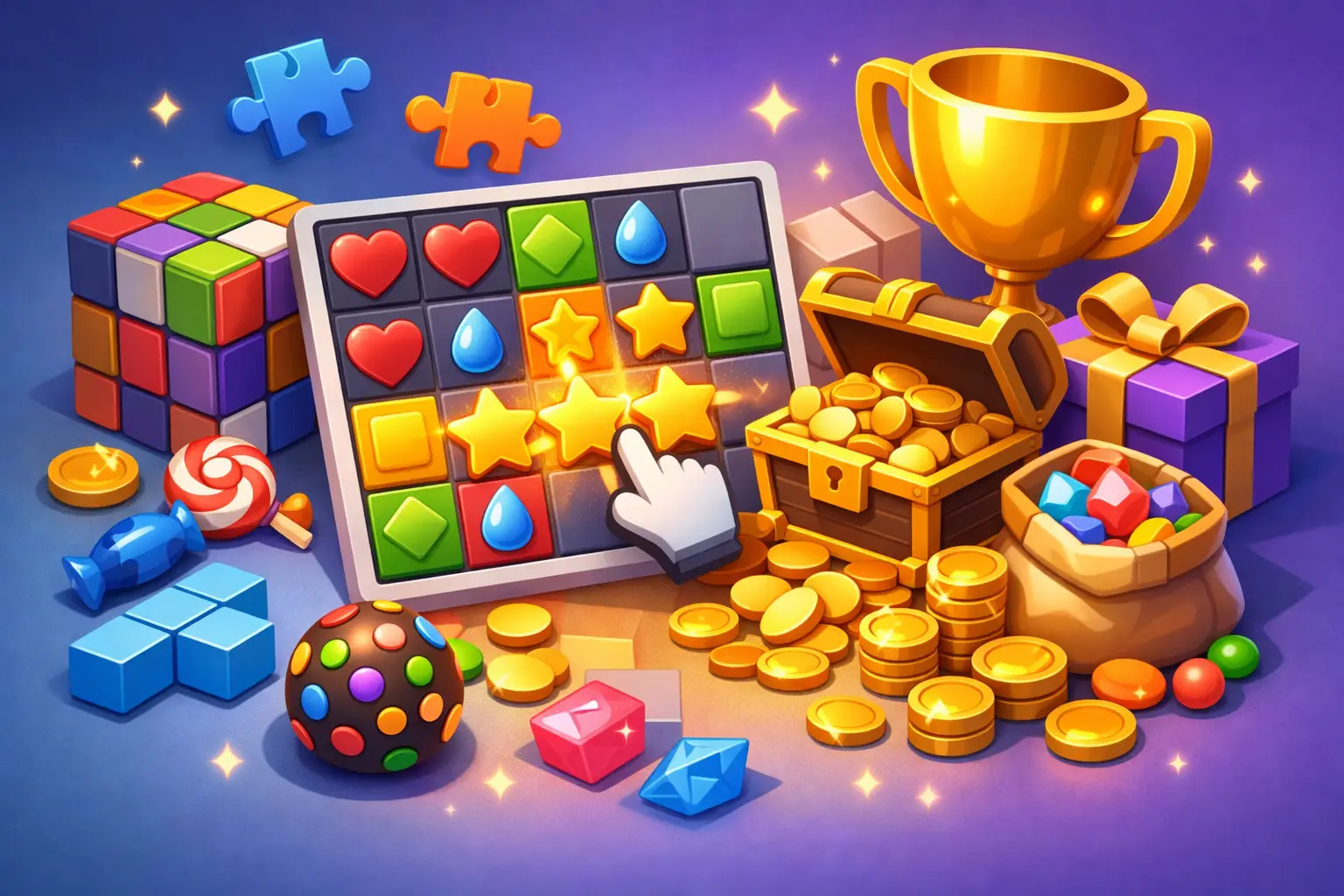
Some mobile games ask for an hour. Others ask for your patience. The best puzzle games with daily rewards ask for neither. They fit into the edges of real life - ten quiet minutes before bed, a coffee break, a few stops on the train - and still give you something satisfying to show for it.
That is why daily rewards matter so much in puzzle games. Done well, they create a steady sense of progress without making play feel like a chore. You open the game, collect a small bonus, clear a few levels, maybe add a new flowerbed or finish a collection, and close it feeling like your time counted. For adult players who want a reliable wind-down, that rhythm matters more than flashy spectacle.
What makes puzzle games with daily rewards actually good?
A daily reward system sounds simple, but there is a big difference between one that feels generous and one that feels like paperwork. The good version supports the core game. It gives you a reason to return without turning the calendar into the main event.
In strong puzzle design, daily rewards work best when they help several parts of the experience at once. A small coin bonus might help you save for boosters. A streak reward might support your next run through a tougher world. A daily task might nudge you to try a mechanic you usually ignore. The reward is useful, but it also adds shape to your routine.
That balance matters because puzzle players are not all chasing the same thing. Some want a calm, familiar ritual. Some want smart level design and efficient booster use. Others want the long arc - restoring a garden, decorating a cozy space, finishing seasonal collections, or contributing to a team. Daily rewards feel best when they feed those goals instead of distracting from them.
The daily reward systems worth looking for
Not every reward loop is equally satisfying. If you are choosing among puzzle games with daily rewards, it helps to look past the icon on the home screen and pay attention to what the system is really giving you.
The first thing to watch is consistency. Small rewards can be surprisingly effective if they show up reliably and have clear value. Coins, boosters, extra lives, event tokens, and collection pieces all work well when they support the way you already play. A modest reward every day often feels better than a giant prize that appears too rarely to matter.
The second is flexibility. The best games let rewards support different play styles. Maybe you are the kind of player who saves boosters for difficult levels, or maybe you like spending them freely to keep your evening session relaxed. A good daily reward system leaves room for both approaches.
The third is connection to progression. Rewards are more meaningful when they tie into something visible. If today's login bonus helps you finish a fountain, unlock a new garden section, or complete a collection row, the game feels alive. You are not just stacking currency. You are seeing small sprouts turn into something tangible.
Then there is pace. Daily rewards should feel like a welcome bonus, not a leash. The strongest puzzle games let you play anytime and still benefit from showing up regularly. That makes the relationship healthier. You return because the game is enjoyable, and the reward is a pleasant nudge, not a demand.
Why daily rewards work so well for match-3 players
Match-3 games are especially good at making daily rewards feel earned. The core interaction is already satisfying - one quick swap, a little chain reaction, a board that opens up in a clever way. Add a thoughtful reward loop, and each short session starts to carry a bit more momentum.
This matters for players who enjoy structure but do not want pressure. A daily chest, a streak calendar, rotating objectives, or event milestones can make a five-minute session feel complete. You do not need to block off your night. You can clear a few levels, collect a useful bonus, and head back to your evening.
There is also a psychological difference between big occasional wins and smaller daily ones. Huge rewards can be exciting, but they are often abstract until you need them. Daily rewards are immediate. They help with today's puzzle, today's decoration choice, today's team contribution. That concrete progress is what keeps many adults coming back.
How to tell if a game respects your time
A lot of players can sense within a day or two whether a puzzle game fits their routine. The signs are not mysterious.
First, the opening sessions should be clear and comfortable. You should understand what you are collecting, how rewards are earned, and where those rewards go. If a game piles on too many currencies or overlapping systems before level 20, daily rewards stop feeling helpful and start feeling noisy.
Second, the game should make short play sessions worthwhile. This is crucial. If your best rewards require long, uninterrupted stretches every day, the system is not really built for a working adult's schedule. Good casual design respects the fact that some nights you have fifteen minutes, and some nights you have five.
Third, progression should remain visible even when your session is brief. Maybe you advanced three levels. Maybe you earned enough stars to finish a garden path. Maybe your team inched closer to a shared goal. Those markers are what turn habit into hobby.
This is where a well-made game from an independent studio can stand out. Garden Match Puzzles, for example, builds around a simple idea: depth without complexity, and respect for the player's time and wallet. That shows up in the way daily rewards, boosters, garden-building, and seasonal goals all support regular play without making it feel crowded.
Features that make daily rewards feel better, not busier
The surrounding features matter almost as much as the rewards themselves. A daily bonus is more exciting when it lands in a game that already has places for that bonus to shine.
Decorating and customization are a big part of that. For many players, the pleasure of puzzle games is not only in winning levels. It is in shaping a space over time. Daily rewards become more meaningful when they help you grow a garden, restore a corner of the map, or collect seasonal touches that reflect your style.
Events can add variety too, if they stay readable. A good event gives your daily session a little extra direction without overwhelming the board with chores. You log in, see a clear goal, play a handful of levels, and make progress in two places at once. That feels efficient in the best way.
Light social play also helps. Leaderboards, co-op goals, and shared milestones can make daily rewards feel communal without turning the game into a pressure cooker. For many adult players, that soft social layer is ideal. You get the warmth of playing together without needing to organize your life around it.
Choosing the right puzzle game with daily rewards for you
The right choice depends on what kind of satisfaction you want from your routine. If you mostly play to relax, look for a game with clean visuals, readable goals, and rewards that support short sessions. If you enjoy deeper strategy, pay attention to level design and whether boosters feel like thoughtful tools rather than automatic fixes.
If long-term progression keeps you engaged, choose a game where daily rewards connect to something you can build and see. That might be a garden, a collection album, seasonal content, or a reward track that reflects your steady play. If you care more about variety, make sure the game rotates goals often enough to stay fresh without becoming cluttered.
It also helps to ask a simple question after your first few days: did the reward system make the game more relaxing, or more demanding? The best answer is usually obvious. A healthy daily loop leaves you feeling accomplished, not managed.
Puzzle games with daily rewards are at their best when progress feels personal
The strongest games in this space understand that daily play is not just about habit. It is about rhythm. You come back because the game fits your life, rewards your attention, and gives you concrete signs of growth - a few more levels cleared, a few more blooms in the garden, a few more pieces added to something you're building.
That is what turns a simple login bonus into something worth caring about. Not the size of the reward, but the feeling that your quiet effort is adding up. When a puzzle game gets that right, even ten minutes can feel beautifully well spent.
If you are choosing your next wind-down game, look for one that makes each return feel light, useful, and rewarding. The best daily systems do not crowd your day. They simply give it a small, satisfying harvest.