A good wind-down game has a small but demanding job: it should give your mind something satisfying to do without asking for more attention than you have left. This garden puzzle app review looks at what makes a match-3 game worth returning to during a coffee break, on a commute, or for twenty quiet minutes before bed.
Garden Match Puzzles is built around a familiar idea - swap neighboring pieces to make matches - but the appeal is in how much care sits around that simple move. Every board gives you a clear goal, every cleared space moves the garden forward, and every session can feel complete even when you only have a few minutes.
Garden Puzzle App Review: What the Game Feels Like
The first few levels are easy to understand without feeling overly explained. Match three or more pieces, clear obstacles, collect what the level asks for, and use the moves you have thoughtfully. The basics arrive quickly, which is exactly right for a game meant to fit into real life rather than take it over.
Then the level design begins to add texture. Some boards ask you to clear a path through vines or uncover tucked-away tiles. Others reward you for planning a chain reaction instead of making the first available match. You can often see a useful move right away, but the better move may be the one that sets up a power piece two turns later.
That balance gives the game its pleasant rhythm. It is approachable when your brain is tired, yet it still offers those small, gratifying moments when one smart swap changes the whole board. Every swap does not need to be spectacular. When a planned combination clears the final objective with a move to spare, though, it feels earned.
The game includes 1,000 hand-crafted levels across 45 themed worlds, so the setting and puzzle goals have room to change over time. That content volume matters for players who prefer a dependable daily hobby over a game they finish in a weekend. There is always another corner of the garden to tend and another puzzle shape to learn.
A Garden That Shows Your Progress
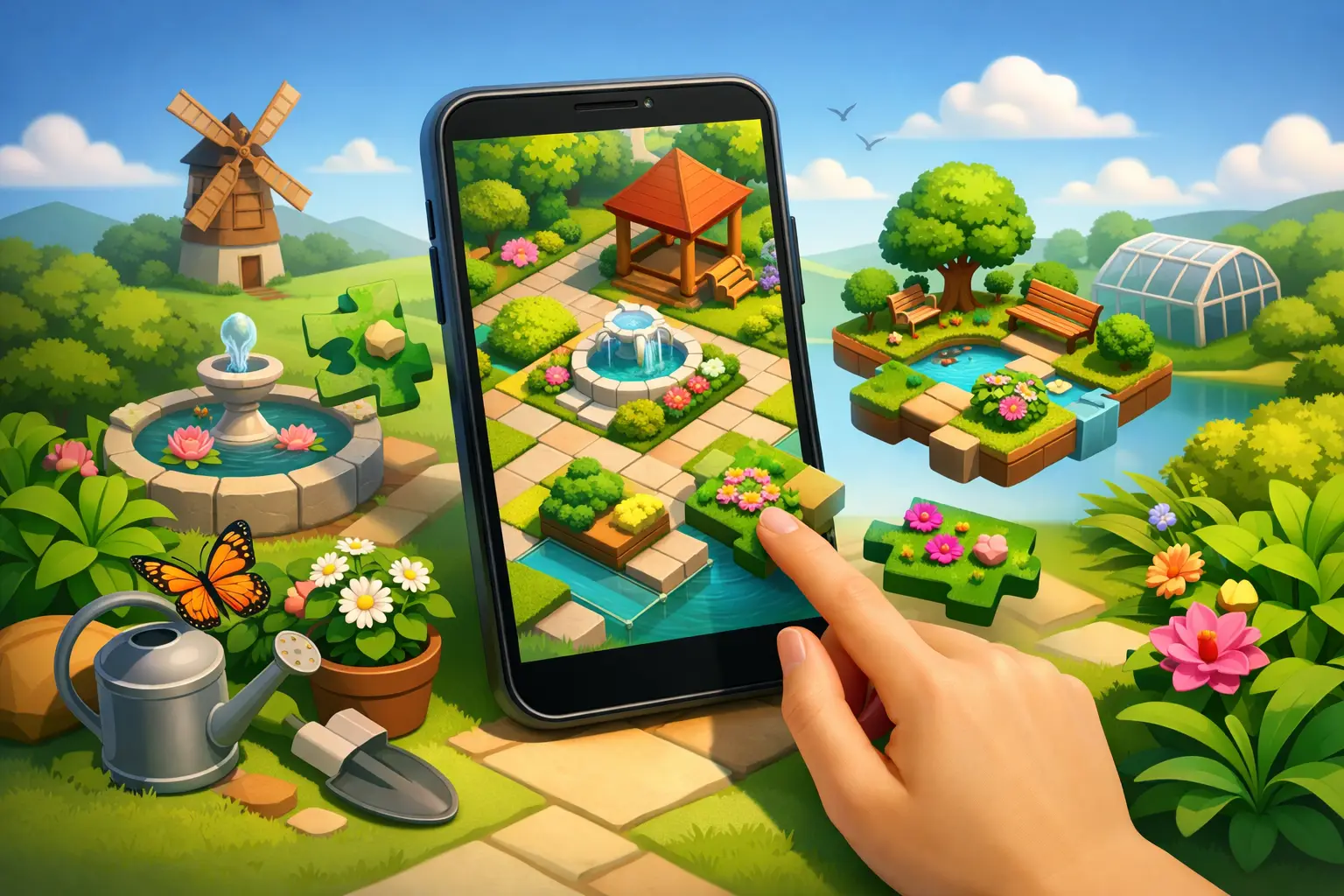
The garden-building layer is more than a decorative pause between puzzles. It gives your puzzle progress a visible result. Clearing a set of levels can lead to new blooms, paths, ornaments, and refreshed spaces, turning a successful session into something you can look back on.
For many players, this is where the game becomes personal. A leaderboard number can be motivating, but a garden you have shaped carries a different kind of satisfaction. You may have twelve new blooms after a productive week, a newly finished courtyard, or a collection that finally feels complete. The progress is concrete without being demanding.
Customization also keeps the experience from becoming a string of disconnected boards. A hard level is still just one level, not a barrier between you and the larger garden. When you return, there is a clear sense of what your effort is helping grow.
The value of frequent, modest rewards
Daily rewards, collections, seasonal events, and the premium reward track create regular milestones without making every session feel like an obligation. The best approach is to treat them as extras around your usual play. If you have time for a few levels, you can make progress. If you feel like spending longer with the game, there are more goals to explore.
Seasonal touches are especially welcome when they add a fresh visual mood or a different route through the garden. They work best as a change of scenery, not a reason to rearrange your schedule. That measured approach suits a game designed for adults with full calendars.
How Much Strategy Do Boosters Add?
Boosters are useful, but they are most satisfying when they support a plan rather than replace one. A well-placed booster can open a cramped section of the board, reach a stubborn objective, or turn a promising setup into a large clear. Knowing when to hold one is often as helpful as knowing when to use it.
The strongest habit is to pause for a moment before making an obvious match. Look for pieces near blockers, consider which objective has the fewest opportunities, and notice whether a match can create a special piece instead of merely clearing three tiles. These brief decisions add meaningful strategy without making the game feel technical.
There will be levels where the best route is not apparent on the first try. That is normal, and it is part of what keeps a long match-3 game interesting. A tough board can ask for patience, a different opening, or smarter booster timing. The key difference is that you can always keep playing. Purchases can enhance progress and help you pursue cosmetic goals faster, but they never gate your ability to continue.
That makes the game easier to recommend to someone who wants control over their hobby budget. You can play casually, save boosters for favorite events, or choose optional extras because they add value to your experience. The choice stays yours.
Social Play Without the Pressure
Co-op multiplayer and leaderboards add a gentle social layer for players who enjoy sharing a goal. Working alongside others can make an event feel livelier, especially when everyone contributes in small pieces over a few days. It is a pleasant way to feel connected without needing to coordinate a strict schedule.
Leaderboards offer another kind of motivation. Some players will enjoy climbing them; others will simply like seeing how a strong week compares with their own usual pace. Neither approach is wrong. The game works well when social features are an invitation, not a test.
This is also where the broad design has an advantage. You can be a dedicated puzzle planner who studies every board, or someone who plays while waiting for dinner to finish. Both styles have room to bloom. There is enough depth to reward attention, and enough clarity to make a short session feel worthwhile.
Who Will Enjoy This Garden Puzzle App?
Garden Match Puzzles is a strong fit for players who want familiar match-and-swap mechanics with more to care about between levels. If decorating a garden, completing collections, earning daily rewards, and joining a cooperative event sound as appealing as clearing a tricky board, the layers work together nicely.
It is particularly suited to five-to-twenty-minute sessions. You can finish a level, make a little garden progress, collect a reward, and put the phone down without feeling as though you stopped in the middle of something important. That makes it a natural bedside or commute companion.
More experienced match-3 players should find value in the booster choices and changing board objectives, though the overall mood remains relaxed rather than intense. If you want every puzzle to demand long stretches of concentration, some early levels may feel gentle. If you want a game that gradually gives you more interesting decisions while staying welcoming, that gentleness is part of the point.
The best garden puzzle games respect the fact that a quiet break is valuable. Pick a board, make a few satisfying swaps, and leave with one more path cleared, one more bloom placed, or one tricky level finally behind you. That is a lovely harvest for a few minutes of play.