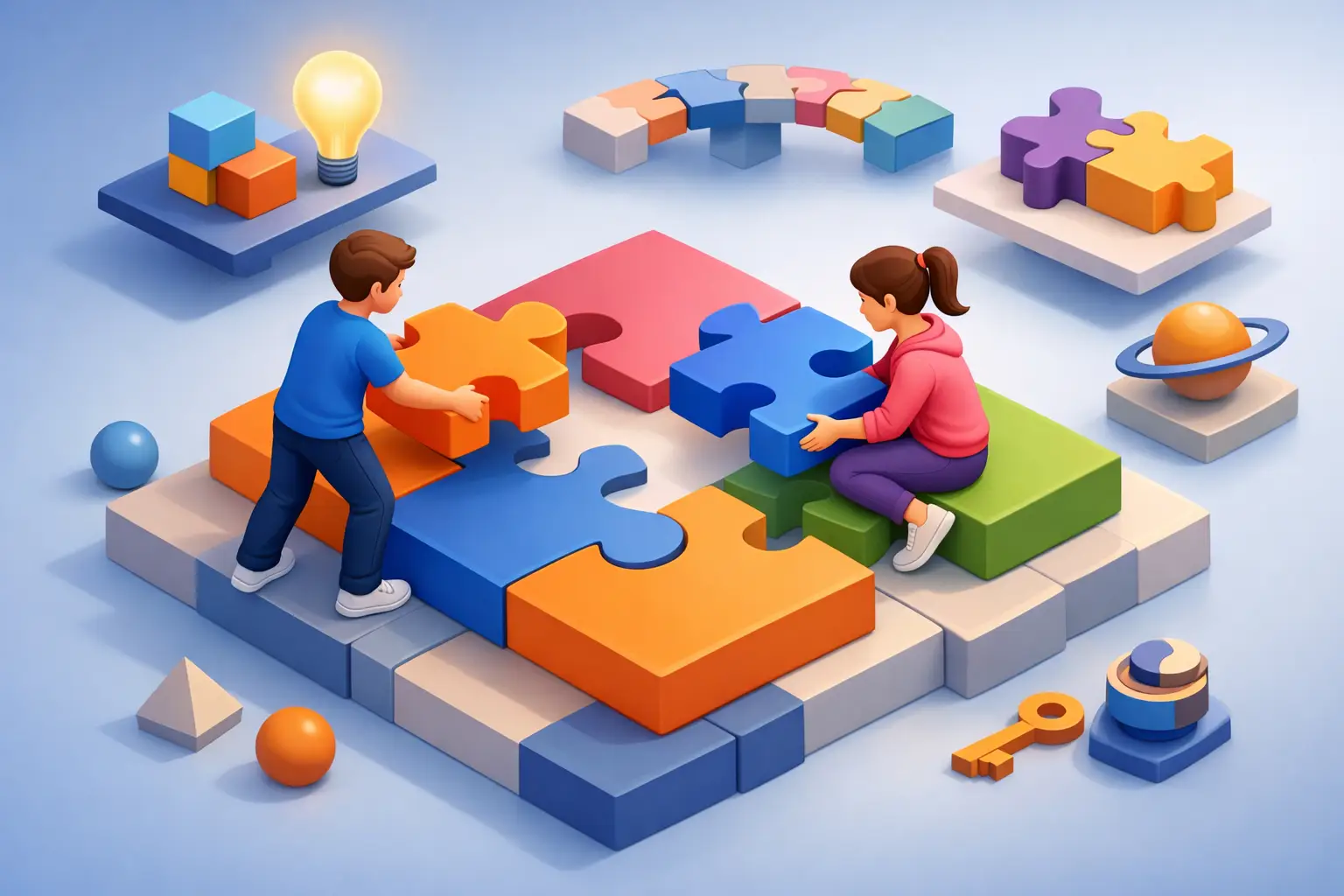
A shared goal can make a familiar match-3 level feel different. Your swap still clears the board, but it also adds a little momentum to a group project: a team chest, a garden milestone, a collection, or a seasonal board. This guide to cooperative puzzle play is for making that social layer feel like a pleasant extension of your usual 5-to-20-minute session, not another obligation on your calendar.
Co-op works best when it gives your individual progress a little extra meaning. You bring the same thoughtful moves, booster choices, and level wins you would make anyway. The difference is that those small efforts can help a group of players see a shared result bloom.
Start With the Kind of Team You Actually Want
The right team is not necessarily the busiest one. For many players, a good fit is a group where members contribute regularly, the mood stays friendly, and no one treats a casual game like a second job. Look at the team description, participation expectations, and recent activity before settling in.
A larger group can make shared goals move quickly, which is satisfying when you enjoy seeing steady progress. A smaller group can feel more familiar and give every contribution more visibility. Neither is automatically better. It depends on whether you prefer a bustling garden party or a quieter neighborhood plot.
If your game lets you join, leave, or search for teams freely, give yourself permission to try a few. A team should suit the way you already play. If you usually clear a handful of levels before bed, choose a group that appreciates reliable, low-pressure contributions rather than constant activity.
Read the Rhythm, Not Just the Score
Numbers tell part of the story, but team rhythm tells the rest. Notice whether members are steadily completing shared tasks across several days, whether requests receive help, and whether the group recognizes ordinary contributions. A player who adds progress most evenings can be more valuable to a cooperative team than someone who makes one dramatic push and disappears.
That steady rhythm is especially helpful in an adult hobby. You may have work, family plans, travel, or simply an evening when you would rather tend your own garden. A healthy team leaves room for all of that.
Make Every Session Count Without Stretching It
Cooperative puzzle play is most rewarding when it fits inside your natural routine. Before starting, take a quick look at the active group goal. Then choose one practical intention for your session: clear two levels, finish a collection task, contribute a requested item, or save a booster for a hard board that advances the event.
This is not about squeezing maximum output from every minute. It is about giving your play a gentle direction. A clear purpose can help you decide whether to replay a near-win, use a booster, or move on and return with fresh eyes later.
In Garden Match Puzzles, hand-crafted levels and garden progression make this balance especially satisfying. A few smart swaps can move your personal garden forward while also adding to a shared effort. You get the immediate pleasure of a board well cleared and the slower satisfaction of watching a community goal fill in.
Prioritize Helpful Progress, Not Perfect Play
A cooperative goal rarely requires every turn to be flawless. Consistency usually matters more than chasing a spectacular single session. If a difficult level is taking several tries, pause and study the board instead of spending boosters out of habit. Check the objective, identify blockers, and make moves near the bottom when possible to create useful cascades.
When a booster can turn a close attempt into a win, using it may be a sensible choice. When the board is still far from its objective, saving that booster is often wiser. The best decision depends on your supply, your available time, and how much the level contributes to the current goal.
Small contributions add up quickly across a team. Clearing three ordinary levels, sending help when it is available, or finishing one event task can be exactly what moves a shared meter forward.
Communicate Like a Good Teammate
Co-op does not require a busy chat. In fact, the most comfortable teams often communicate simply and clearly. A brief hello when you join, a thank-you when someone helps, or a note about a shared objective is enough to make the group feel human.
If your team uses chat, keep messages useful and warm. You might mention that you are working on a particular task, congratulate the group for completing a milestone, or share a straightforward level tip. Avoid assuming everyone plays at the same pace or on the same schedule.
Requests are part of the cooperative loop, too. Ask when you need help, and respond when you can. There is no need to track every favor. A healthy team works because players take turns being the person who needs a hand and the person who can offer one.
Give Specific, Low-Pressure Encouragement
General cheerleading is pleasant, but concrete recognition feels more meaningful. Instead of writing only “great job,” try “we finished that goal with a full day to spare” or “those extra contributions got us over the line.” The message stays light while showing that people noticed the effort.
That kind of encouragement is useful for team leaders as well. If you run a group, set expectations in a sentence or two and revisit them calmly when needed. For example, you can ask members to contribute when they play and let them know that quiet periods are understood. Clear standards are kinder than vague pressure.
Know When to Focus on the Team and When to Play Your Own Way
Not every event, task, or level needs to become a team priority. Sometimes the best use of your session is continuing the part of the game you enjoy most: decorating a new garden area, collecting a reward, or solving a level that has been waiting for a fresh strategy.
The trade-off is simple. Focusing on a shared objective can bring group rewards and a stronger sense of connection. Focusing on personal progression can be more relaxing when your attention is limited. Both choices are valid, and a good cooperative system supports both.
Try using a flexible split. On nights when you have extra time, give a few levels to a team event or help finish a close milestone. On shorter sessions, play the level that interests you and contribute naturally through your normal progress. You are still part of the garden even when you are only watering one corner of it.
Build Better Puzzle Habits Together
Teams can quietly improve your own play because shared goals give you more chances to notice patterns. You may start recognizing when a color is scarce, when an obstacle needs a special piece rather than a standard match, or when a board rewards patience over quick taps.
If players share tips, keep them practical. Explain the reason behind a move: clearing lower tiles creates more board movement, combining power-ups can remove multiple layers of blockers, and completing the stated objective matters more than clearing every available piece. Advice is most helpful when it leaves room for different approaches.
You can also learn from your own results. If you clear 47 levels over a week, notice which kinds of boards slowed you down and where boosters made the biggest difference. If your garden gains 12 new blooms, take a moment to enjoy that visible progress. Cooperative play should add a shared harvest to those wins, not take away from them.
Let the Social Layer Stay Light
The best cooperative puzzle play creates connection without demanding constant attention. Join a team that respects your pace, contribute in the ways that feel natural, and use communication to make the experience warmer rather than louder. Shared goals are there to give each level another small reason to feel worthwhile.
A good team will still be growing when you return tomorrow. Bring a few thoughtful moves, help where you can, and let the garden take shape one satisfying swap at a time.