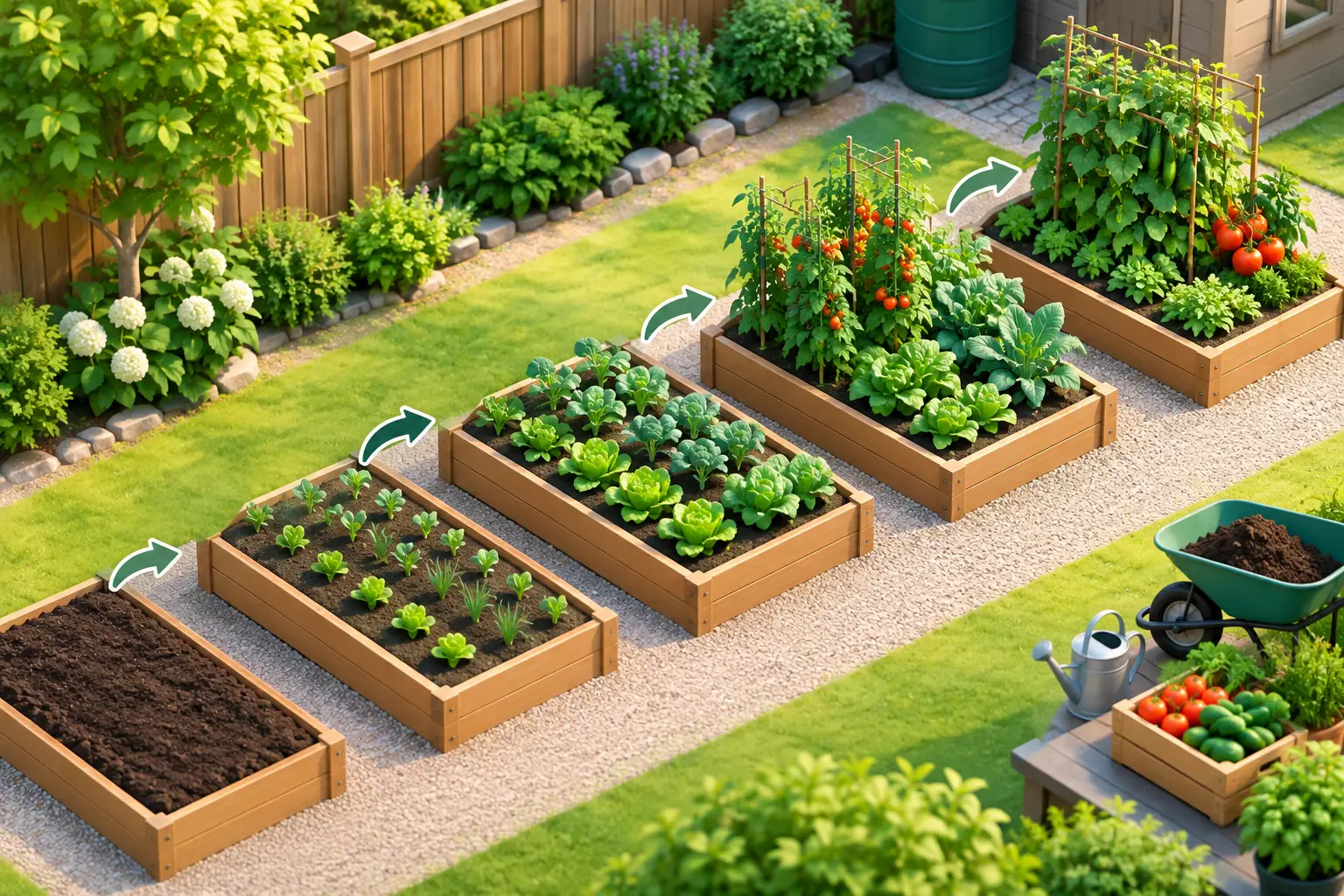
A good guide to garden progression systems starts with a simple idea: progress should feel visible. Clearing a tricky board is satisfying on its own, but seeing that win become a new flower bed, a finished garden corner, or a collection piece gives each short session a little more meaning.
In Garden Match Puzzles, progression is designed to reward both focused play and quiet daily routines. You might clear three levels on a commute, return to claim a daily reward after dinner, then choose where a new set of blooms belongs in your garden. None of those moments needs to take long. Together, they build a garden that feels distinctly yours.
How Garden Progression Systems Work
Garden progression is not one straight path. Levels provide the foundation, while garden projects, rewards, collections, events, and community features create several ways to keep moving forward. The best approach is to understand what each system gives you, then choose the one that suits your mood and available time.
The main progression loop begins with match-3 levels. Each completed level earns progress toward garden-building tasks and other goals. Some boards are quick and breezy; others ask you to plan a few moves ahead, save a booster for the right moment, or work around a layout that changes as you play.
That variety matters. A level you finish on the first try can be a pleasant reset. A more involved puzzle can become a satisfying little project for later. Since you can play anytime, there is room to pause, return, and try a different approach without treating your free time like an appointment.
Levels Are the Roots of Your Garden
Hand-crafted levels are where strategy starts to pay off. Before making your first swap, take a moment to notice the board's objective and the pieces closest to it. If you need to clear obstacles, work near those obstacles rather than making attractive matches elsewhere. If the board asks you to collect a color or item, look for chances to create matches that help several goals at once.
Special pieces and boosters are most useful when they solve a real problem. Combining them can clear large sections of a board, but timing is more valuable than spectacle. A booster used to open a cramped section may create the space needed for several strong matches afterward.
If a level resists you, that does not always mean you need more power. Try starting from a different area, prioritizing board space earlier, or holding a special piece until the objective is within reach. Small changes in order can change the entire board.
Turn Level Wins Into Garden Growth
Garden-building is the visual heart of progression. As you complete tasks, your garden gains new paths, plants, decorations, and details that make the space feel more settled over time. A single new bloom may seem modest, but a series of choices turns an empty patch into a place with personality.
The pleasure here is not only in finishing a project. It is in noticing the accumulated work. Your garden may have 12 new blooms, a refreshed seating area, and one more completed corner because of the levels you cleared across the week. That is concrete progress, not a vague progress bar.
When you have a choice between projects, pick the one you will enjoy seeing most often. Some players like finishing one area before moving on. Others prefer to place a few touches across the garden, letting the whole space develop gradually. Neither approach is better. The right choice is the one that makes opening the game feel welcoming.
Let Daily Rewards Support Your Routine
Daily rewards work best as a gentle companion to regular play, not a chore to manage. A quick check-in can add helpful resources, and a few minutes with a favorite level type can keep your garden project moving even on a busy day.
Think of these rewards as gardening supplies set aside for when you need them. Save useful boosters for a difficult board, or use a small reward to make progress on a task that is nearly complete. There is no need to spend everything immediately. A little patience gives you more options when a puzzle asks for it.
If you play in short sessions, set yourself a simple stopping point: one garden task, a few levels, or one event goal. Ending on a completed action keeps the routine enjoyable and makes it easy to return later.
Collections Add Detail to Long-Term Progress
Collections give observant players another reason to engage with the game over time. They turn individual rewards and discoveries into a fuller picture, offering satisfying milestones beyond the next garden task.
These systems are especially good for players who enjoy completing sets. You may be drawn to a particular seasonal theme, a decorative style, or the simple pleasure of filling in the last open space. Collection progress is a reminder that not every reward has to be immediately practical. Sometimes it is enough that it adds character to your garden story.
There is a trade-off, though. Chasing every collection goal at once can make a relaxing game feel overly busy. Focus first on the sets that genuinely appeal to you. The rest can develop naturally as you play levels, join activities, and collect rewards over time.
Use Seasonal Events for a Change of Pace
Seasonal events bring fresh objectives, themed rewards, and a different rhythm to your usual level routine. They are a good place to test strategies, enjoy a new visual theme, or make progress alongside the wider player community.
Approach events with the same calm mindset you bring to the main garden. If you have extra time, you can spend a longer session working toward a milestone. If you only have a few minutes, one completed objective is still worthwhile. Events should add color to your routine, not crowd it.
Pay attention to which tasks overlap with your normal play. An event goal that lines up with levels you already want to clear is an easy fit. If it sends you toward a board type you do not feel like playing that day, it is fine to return to your garden project instead.
Play Together Without Losing Your Own Pace
Co-op features and leaderboards add a light social layer to progression. A team can make shared goals feel warmer, especially when everyone contributes in small pieces. You might clear a handful of levels, help move a group objective forward, and see the combined result take shape.
The key is to choose community play that feels encouraging. Some players enjoy checking the leaderboard and seeing how far they can climb during a strong week. Others prefer the steady satisfaction of helping a team goal grow. Both are valid ways to participate.
Social progress works best when it remains optional and welcoming. Your garden is still your own, and your schedule still sets the pace.
A Simple Progress Plan for Busy Weeks
When life is full, use a three-part plan. First, clear levels that move your current garden task forward. Second, collect your available daily rewards and save anything especially useful for a tougher board. Third, spend any remaining time on an event, collection, or team goal that sounds enjoyable.
On a quieter evening, you can expand that plan by revisiting a challenging level and experimenting with boosters or special-piece combinations. The goal is not to play perfectly. It is to make each session feel complete, whether you have five minutes or twenty.
A garden progresses one thoughtful choice at a time. Clear a board, place a bloom, help your team, and leave the next corner ready for when you return.