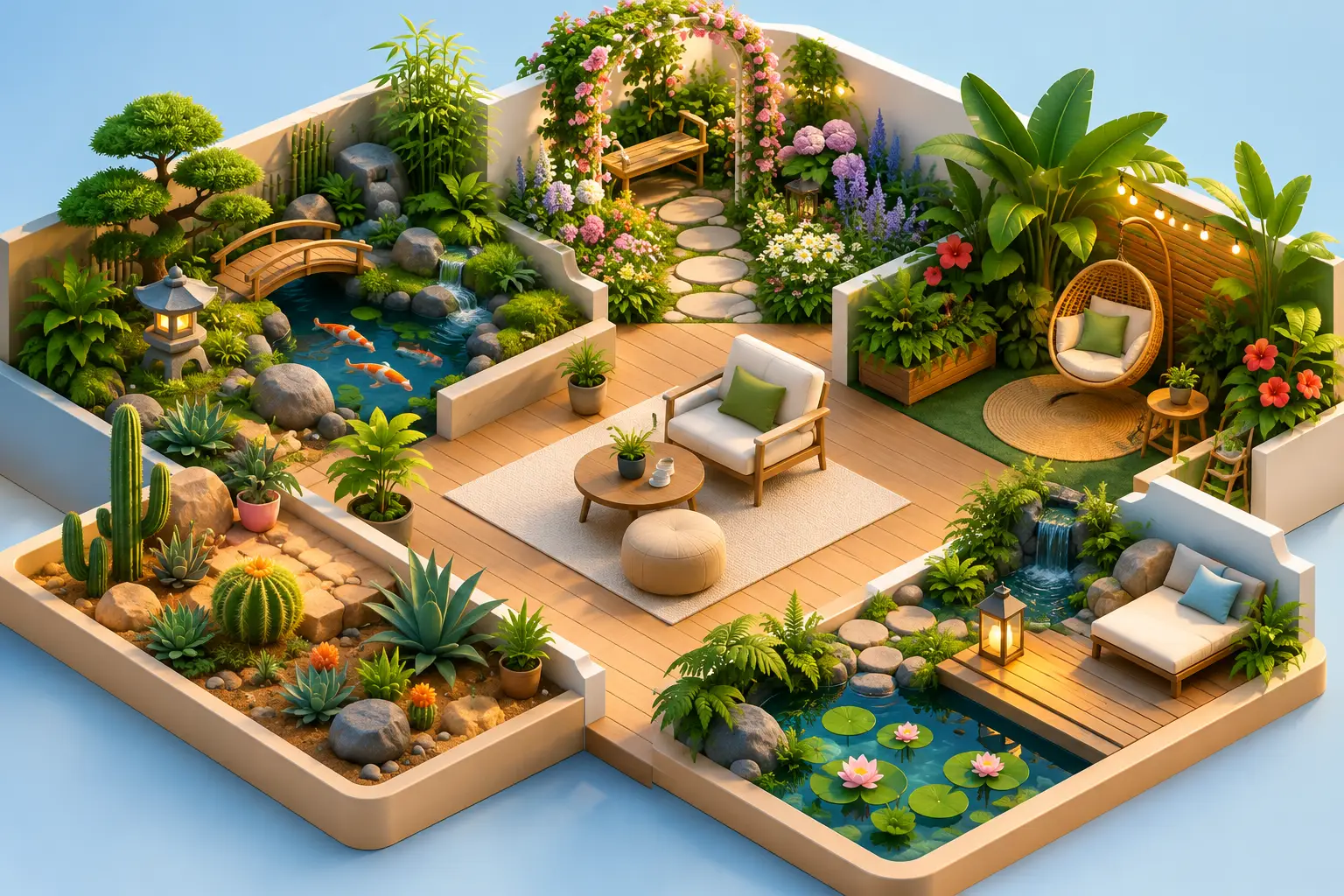
A garden feels more satisfying when it looks like somewhere you would actually want to spend time. Maybe that means a quiet path under flowering trees, a sunny courtyard with bright planters, or a moonlit corner where every detail has a softer glow. Virtual garden themes give each new space a point of view, turning decoration from a series of choices into a garden with its own character.
That character matters because your garden is more than a backdrop between match-3 levels. It is a visible record of the levels you cleared, the rewards you collected, and the small design decisions that made the space yours. A good theme gives those choices direction without making the process feel like work.
Why Virtual Garden Themes Make Progress Feel Better
A themed garden creates a satisfying connection between play and progress. Clearing a tricky board may earn stars, blooms, coins, or a new decorative piece, but the reward lands differently when it has a place in a larger scene. A stone bench is pleasant on its own. A stone bench beneath an arbor, beside climbing roses, becomes part of a moment.
Themes also make large gardens easier to approach. Instead of trying to decorate every corner at once, you can focus on one area and one mood. Finish a welcoming entry garden this week, then move on to a tucked-away reading nook or a lively harvest plot when you are ready. Small sections add up, and each completed area gives you a clear sense of what you have built.
For players who enjoy a few relaxing rounds before bed or during a commute, this is especially useful. You do not need an hour of uninterrupted time to make meaningful progress. Clear a level, place a new fountain, adjust a few flowers, and your garden has changed in a way you can see immediately.
Choose a Theme With a Clear Starting Point
The best virtual garden themes begin with one simple decision: what should this space feel like? Start with atmosphere rather than individual objects. A calm garden may use soft greens, pale stone, and gentle water features. A festive courtyard may lean toward warm lights, colorful blooms, and places that feel ready for company.
You do not need to commit every item to a strict style. In fact, a little contrast often keeps a garden from looking flat. A formal hedge border can make a wildflower patch feel more intentional. A rustic wheelbarrow can add warmth to a polished terrace. The theme should guide your choices, not turn them into rules.
The cottage garden
A cottage-inspired space feels lived in, abundant, and pleasantly imperfect. Layer flowers around paths, let foliage soften the edges of fences, and use details such as benches, birdhouses, watering cans, or small garden gates to make the scene welcoming.
This theme works well when you want frequent visual rewards. Each new bloom can fill a gap, add a fresh color, or make an existing corner feel fuller. The trade-off is that cottage gardens can get visually busy. Leave a few open paths and quieter green areas so the details still have room to shine.
The formal courtyard
For a more organized look, build around symmetry. Matching planters, centered fountains, trimmed hedges, and clean stone paths create a space that feels composed without feeling cold. This is a good fit if you enjoy making each placement feel deliberate.
A formal layout benefits from repeating a few colors rather than using everything at once. White flowers, deep green hedges, and one accent color can be enough to make the whole space feel polished. Save playful decorations for the edges, where they can bring personality without disrupting the structure.
The woodland retreat
Woodland themes trade crisp lines for shade, texture, and a sense of quiet discovery. Think winding paths, ferns, mossy stones, wooden bridges, and flowers that appear in small clusters rather than precise rows. A tucked-away lantern or a cozy seat can make the garden feel like a private escape.
This approach is especially forgiving when your collection of decorations is still growing. Natural-looking spaces do not need every item to match exactly. A new tree, a patch of wildflowers, or a rustic feature can feel like it has always belonged there.
The seasonal celebration
Seasonal themes are ideal for players who like refreshing a familiar garden over time. Spring can bring fresh blossoms and bright paths. Summer can favor fountains, full flower beds, and sunny colors. Autumn can feel rich with harvest details and warm foliage, while winter can turn a garden into a calm, sparkling retreat.
The key is not to replace everything. Keep one or two anchor pieces in place, such as a favorite statue, central path, or fountain, and let the surrounding details change with the season. Your garden stays recognizable while still giving you something new to enjoy.
Build With Anchors, Layers, and Breathing Room
Once you have a theme, begin with one anchor. It might be a fountain, a large tree, an arbor, a pond, or a central patio. The anchor gives the eye somewhere to land and makes later choices easier. Rather than placing decorations wherever there is empty space, you can ask whether each one supports the scene around that focal point.
Next, add layers. Start with the larger elements that shape the space: paths, hedges, trees, and water features. Then bring in medium details such as planters, seating, gates, and trellises. Finish with smaller touches, including flower clusters, lanterns, or decorative accents.
This order prevents a common problem: placing many charming small items before deciding where the garden is actually going. Small details are often the most fun, but they have more impact when the larger layout already makes sense.
Breathing room is just as useful as decoration. A clear stretch of path makes a planted border look richer. An open patch of lawn can make a large tree feel grander. If one part of your virtual garden looks crowded, try removing one or two items before adding another. The result may feel more complete, not less.
Let Your Match-3 Play Support the Garden
Garden design is more rewarding when your next decorative goal gives your gameplay a little extra purpose. If you are working toward a new centerpiece, pick a few levels to replay for a comfortable win and reliable rewards. If a board has a difficult layout, pause before using a booster and look for the move that changes the board most dramatically: opening blocked tiles, creating space near the bottom, or setting up a special piece.
There is no single right approach. Some players enjoy saving boosters for a level that has been waiting for a second look. Others prefer using a helpful boost to keep a short play session moving. Both are sensible when the goal is to enjoy the time you spend playing, not stretch it out.
In Garden Match Puzzles, every cleared level can move both parts of the experience forward: your puzzle progress and the garden you are shaping around it. That is why a well-chosen theme can make even a small session feel substantial. You are not only solving a board. You are earning the next detail in a place that is becoming your own.
Refresh a Theme Without Starting Over
A garden does not have to stay fixed once you complete an area. Revisit an older corner after you have unlocked new decorations or simply after your taste has changed. Swap a few flowers, move a bench toward a better view, or shift your color palette from bright to soft. A modest update can make a familiar space feel newly inviting.
If you are unsure where to begin, take a slow look at your garden and notice the area your eye reaches first. Is there a clear focal point? Does the path lead somewhere appealing? Are there colors or objects you keep repeating because you genuinely like them? Those answers are more useful than chasing a perfect layout.
Your best garden theme is the one that makes you happy to return for another few moves. Give it a place to grow at its own pace, one bloom, path, and satisfying match at a time.