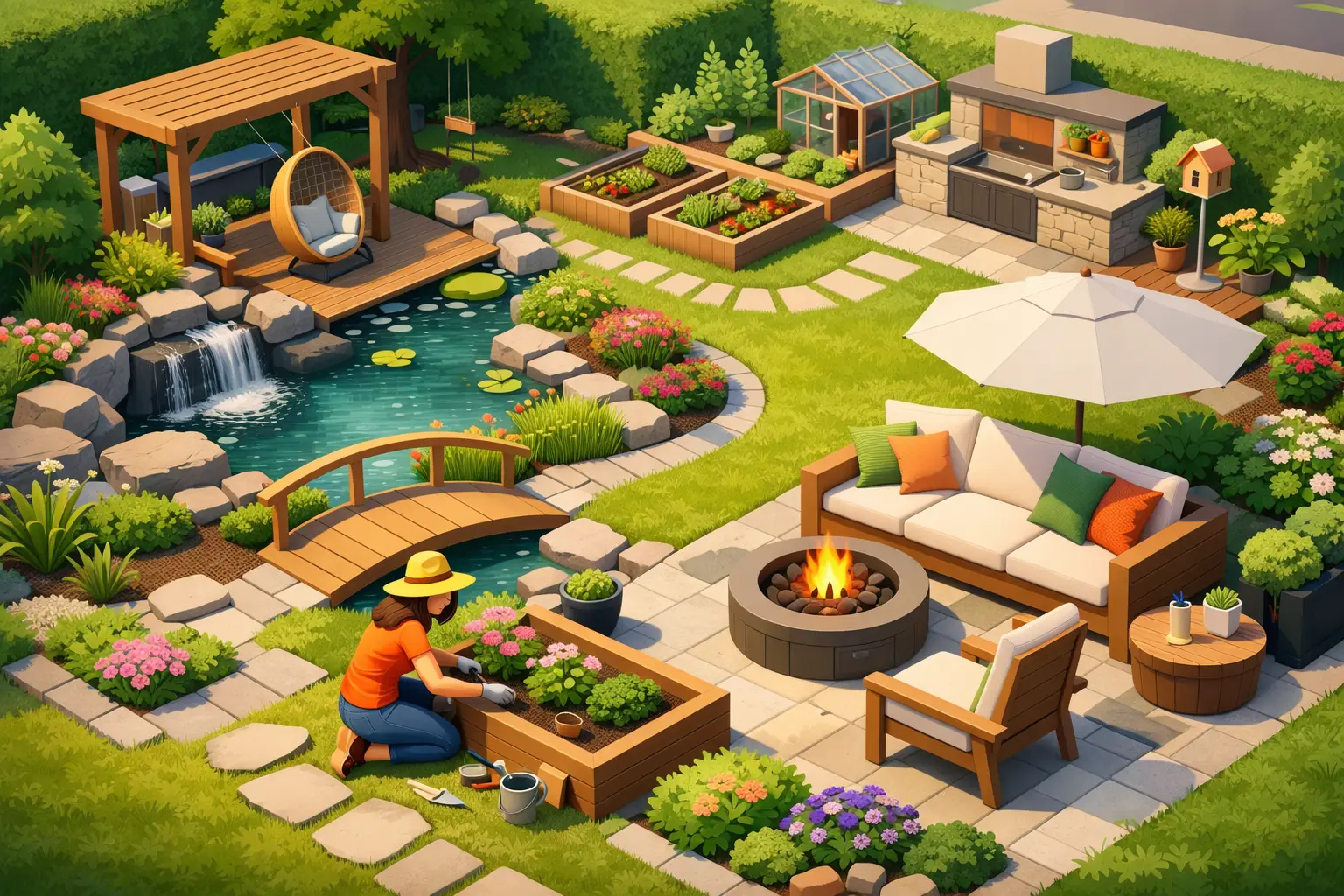
A garden becomes memorable when it starts to look like a place you would actually pause in. This guide to garden customization is not about filling every open patch as quickly as possible. It is about turning each reward, bloom, pathway, and decorative choice into a space that feels personal after a few calm sessions of play.
In Garden Match Puzzles, every cleared level can move your garden forward. The best results come from treating that progress as a creative project, not a race. You can make a polished courtyard, a bright flower-filled retreat, or a quieter corner with room for the details you earn next week.
Start With the Feeling You Want to Create
Before choosing individual decorations, decide what you want your garden to feel like. This one decision makes later choices easier, especially when you have several appealing options waiting.
A cheerful garden usually begins with open space, colorful flower beds, and details that create a welcoming path through the scene. If you prefer something calmer, lean toward softer colors, water features, tucked-away seating, and planting that frames the edges instead of crowding the center. A classic estate garden can use symmetry, tidy paths, and matching decor, while a more playful design can mix shapes, heights, and unexpected accents.
You do not have to commit to one style forever. Gardens grow in layers, and a favorite early area can become the peaceful heart of a larger, more varied design. Still, having a starting mood keeps each new addition from feeling random.
Pick One Area to Make Memorable
It helps to choose a focal point before decorating the entire garden. This could be an entrance path, a patio, a fountain, a greenhouse, or a central flower bed. Give that spot a little extra attention, then let nearby details support it.
For example, if a fountain is the center of your garden, use paths and flower beds to guide the eye toward it. Place seating where it feels natural to stop, and avoid adding several large decorations nearby that compete for attention. If your focal point is a cozy patio, frame it with plants and lights rather than filling the surrounding area with unrelated items.
A clear focal point gives the garden structure. It also makes your progress easy to notice. After a handful of levels, you may see that one corner has gained new blooms, a finished path, and a more welcoming place to sit.
Use Layers Instead of Filling Every Space
The most inviting gardens feel full without feeling crowded. That balance comes from layering different kinds of details: the foundation, the structure, and the finishing touches.
Your foundation is the broad visual field - grass, ground cover, paths, and large planting areas. These choices establish the garden's overall rhythm. Structure includes bigger elements such as trees, benches, fountains, gates, or walls. The finishing touches are smaller items that bring character: flower pots, lanterns, garden signs, and collections that suggest someone cares for the space.
Start with the largest pieces, then build outward. A bench placed first can help you decide where a path should lead. A tree can create a natural boundary for a private nook. Once those choices are in place, smaller decorations have a purpose instead of simply taking up room.
Empty space matters, too. A clear patch of lawn or a simple stretch of path gives colorful areas room to stand out. If every section is equally busy, the eye has nowhere to rest. Think of open space as part of the design, not an unfinished task.
Let Paths Tell a Small Story
Paths do more than connect sections of a garden. They show visitors where the garden begins, where it slows down, and where a pleasant surprise might be waiting.
A direct path works well for an entrance or a formal garden. Curved paths feel more relaxed and are especially useful when you want to reveal a feature gradually. You might lead a path past bright flower beds before it arrives at a quiet seating area, or use a short branch path to connect a small decorative collection.
Try to give paths believable destinations. A route that ends at a bench, archway, or flower display feels intentional. One that stops in an empty corner can make even a beautiful decoration feel disconnected. When you earn a new piece, ask a simple question: does it create a destination, frame one, or make the trip there more pleasant?
A Guide to Garden Customization Through Progress
The pleasure of customization is closely tied to progress. A new decoration feels better when it marks a level you solved, a collection you completed, or a seasonal goal you worked toward in a few relaxing sessions.
That is why it can be useful to avoid placing every new reward immediately. Let a few options gather while you play, then return to the garden with a fresh view. You may notice that several pieces work together around one area, creating a stronger result than any single placement would have.
Match-3 strategy supports this process without turning your garden into homework. When a level is tricky, look first at the board's real objective. Clearing blockers near the bottom can open more useful moves. Combining boosters is often more valuable than using them one at a time, particularly when a board has several obstacles. And when you have a strong opening move, save a moment to see whether a better combination is one swap away.
Every thoughtful solve can add another piece to your garden's story. You are not just clearing tiles. You are building toward the next path, planting, or detail that makes an area feel complete.
Create Distinct Zones Without Making Them Match
A larger garden feels more lived-in when it has a few distinct zones. The key is giving each area a purpose while repeating enough colors, plants, or materials to make the whole space feel connected.
An entry area can be bright and open, with clear paths and welcoming flowers. A central gathering space might use seating, a fountain, or a larger decorative feature. A tucked-away corner can become more intimate, using taller plants, softer color, and fewer objects. If you have a collection of related items, placing them in their own small display area can make them feel curated rather than scattered.
These zones do not need matching decor. They need a shared thread. Repeating one flower color, path style, or type of greenery across different spaces is often enough. The result feels collected over time, which is exactly what a growing garden should feel like.
Make Seasonal Pieces Part of the Garden
Seasonal events and special rewards are a chance to refresh the garden without rebuilding it. Rather than replacing everything, give seasonal pieces a natural home. A festive display can brighten the entryway, while a themed flower bed can become a small feature near a path or patio.
When the season changes, you can move those pieces, store the look mentally as a favorite chapter, or blend a few into your regular layout. A garden does not need to stay fixed to feel finished. Small changes are what keep it enjoyable to revisit.
Avoid the Two Most Common Design Traps
The first trap is decorating for completion rather than enjoyment. If you place items only because there is an available space, the garden can lose its personality. Leave room for future rewards and let new pieces earn their spot.
The second is treating every decoration as equally important. A garden needs supporting details, but not every item needs to be the star. Choose a few features to carry each area, then use smaller pieces to add texture around them.
If a section feels off, do not assume you need more decor. Sometimes removing one large item, widening a visual gap, or redirecting a path solves the problem. Good customization is often less about adding and more about noticing what the space already needs.
Your garden is allowed to change with your mood, your latest level wins, and the rewards you decide to keep close. Add one new bloom after a satisfying session, adjust a path when inspiration strikes, and let the space become more yours a little at a time.