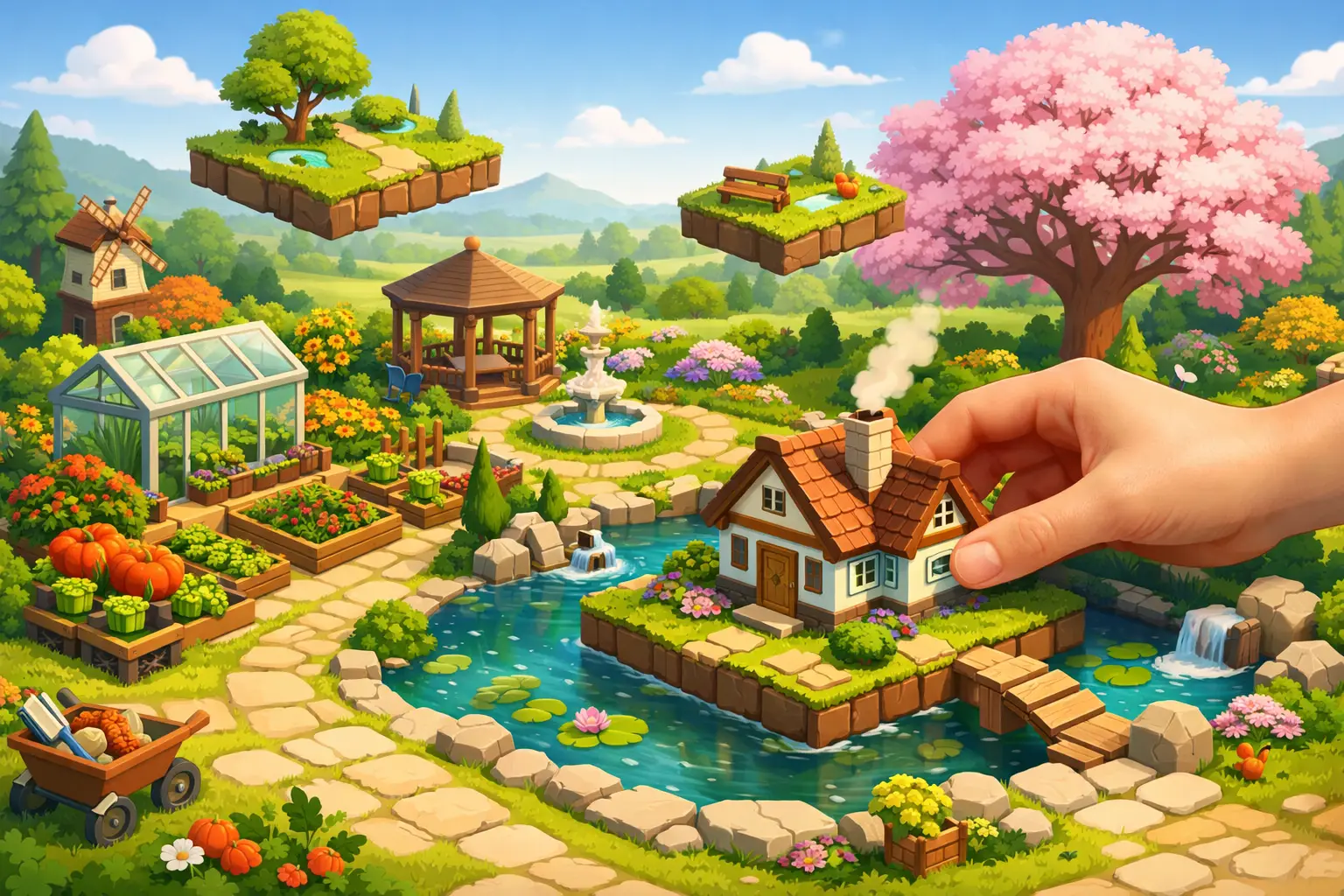
One more level turns into one more flower bed faster than most players expect. That is the quiet magic of a garden building game: every win gives you something to look at, improve, and feel proud of. You are not just clearing tiles for points. You are shaping a place that gets brighter, fuller, and more personal every time you play.
That difference matters. Plenty of mobile games are fun for a few minutes, but the ones people return to every day usually give progress a visible home. When puzzle play feeds into decoration, collections, unlocks, and events, each session feels rewarding in more than one way. Every swap feels amazing, but the real hook is seeing your garden grow because of it.
What makes a garden building game different?
At its best, a garden building game blends two kinds of satisfaction. The first is immediate: matching pieces, triggering combos, clearing goals, and squeezing out a win with smart moves. The second is long-term: restoring spaces, choosing decorations, opening new areas, and building a garden that reflects your taste.
That mix is powerful because it keeps the experience easy to start but hard to put down. A single level can be finished in minutes. The garden around it gives those minutes more meaning. Instead of progress disappearing into a score screen, it turns into fountains, paths, hedges, lanterns, and themed spaces that make the world feel alive.
For casual players, that creates a relaxing rhythm. For more strategic players, it adds another layer of motivation. You are not only trying to beat the next challenge. You are working toward the next reveal, the next decoration choice, or the next part of your dream garden.
The puzzle loop works because the reward is visible
A lot of mobile games offer rewards, but not all rewards feel satisfying. Coins in a menu are useful, yet they are abstract. A restored garden corner is concrete. You can see it. You can compare it to where you started. That visual payoff makes progress feel real.
This is one reason garden themes work so well with match-3 mechanics. Match-3 gameplay is already built around color, pattern, and transformation. A garden setting extends that feeling. You clear pieces on the board, then clear overgrown spaces in the world. You create combos in a level, then create beauty in the environment. The emotional connection is stronger because the result is warm, cozy, and easy to appreciate at a glance.
It also gives every completed level a little extra momentum. Even if a stage was tricky, the next decoration unlock softens the friction. If a level was easy, the reward makes it feel worthwhile rather than disposable. The game keeps moving forward on two tracks at once, and that is where the stickiness comes from.
Garden progression turns short sessions into a hobby
The best mobile games respect the way people actually play. Sometimes you have two minutes in line. Sometimes you want a longer evening session on the couch. A garden building loop supports both.
In a short session, you can clear a couple of levels, collect a reward, and place one new upgrade. That feels complete. In a longer session, you might push through a set of tougher stages, use boosters strategically, complete an event task, and unlock a whole new themed area. That feels substantial.
This flexibility is a big reason the format works so well for adults who want entertainment without friction. You do not need a long tutorial to understand the basics, but there is still plenty to chase over time. New worlds, handcrafted levels, collections, seasonal content, and social competition can all sit around the core loop without making it feel overwhelming.
That balance is harder to achieve than it looks. If the garden side is too light, the game starts feeling generic. If it is too demanding, the experience loses its cozy appeal. The sweet spot is depth without complexity - enough systems to create momentum, but simple enough that the next reward always feels within reach.
Why customization matters in a garden building game
Customization changes progress from something earned into something owned. That is a subtle shift, but it matters.
When players choose how a garden looks, they become more invested in returning to it. A bench is not just a bench if you picked the style yourself. A new area is not just content if it reflects your decisions. Personalization creates attachment, and attachment increases retention in a way that raw rewards alone often cannot.
There is also a feel-good factor here that fits the genre perfectly. Gardens are naturally expressive spaces. They are about arrangement, color, mood, and care. Even light decoration choices can make players feel creative without adding pressure. You do not need deep design skills to enjoy making a space look better. You just need clear options, quick feedback, and a steady stream of unlocks.
That is why visual polish matters so much in this category. The stronger the before-and-after effect, the more satisfying every choice feels. Clean animation, rich color, and distinct themes make garden upgrades feel earned instead of routine.
Challenge still matters - cozy does not mean shallow
A warm theme can fool people into thinking these games are all vibe and no strategy. The stronger titles prove otherwise.
A good garden game needs level design that keeps players engaged beyond aesthetics. That means boards with variety, obstacles that change the puzzle flow, and moments where smart planning beats random swiping. Combos should feel exciting, boosters should feel useful rather than mandatory, and difficulty should rise in a way that creates momentum instead of fatigue.
This is where handcrafted content stands out. When levels are designed with intention, each stretch of the game can introduce a fresh idea, remix familiar mechanics, or set up satisfying challenge spikes. Players feel the difference. They may not describe it in game-design terms, but they notice when a game feels fair, surprising, and worth another try.
There is a trade-off, though. If challenge ramps too aggressively, the relaxing fantasy starts to crack. If everything is too easy, the reward loop loses tension. The best experience gives players enough resistance to make wins feel earned while still keeping progress visible and frequent.
Daily rewards, events, and social play keep the garden growing
The garden itself creates long-term motivation, but live content keeps it fresh. Daily rewards, limited-time events, special collections, and team features add reasons to check in beyond the next level.
This works especially well in a garden setting because new content feels natural. Seasonal decorations, event-themed spaces, and collectible sets all fit the fantasy without feeling forced. One week you might be chasing a leaderboard boost. The next, you might be unlocking a limited-time cosmetic or contributing to a team goal. The core play stays familiar, but the context keeps changing.
Social systems add another useful layer. Not every player wants intense competition, but many enjoy light teamwork, shared milestones, and the feeling of being part of a community. Team events, co-op participation, and friendly leaderboard movement can make a solo puzzle session feel more connected.
That said, these systems need a light touch. Too many pop-ups or too much pressure can crowd out the calm appeal that brings players in. The strongest live-service design supports the garden journey instead of interrupting it.
What players should look for in the right experience
If you are choosing a new game in this category, the best signal is how well the puzzle loop and garden loop support each other. Great visuals alone are not enough. Neither are endless levels if the rewards feel empty.
Look for clear progression, decoration that feels meaningful, and enough content variety to keep the experience moving. You also want a game that respects your time. Good onboarding, readable goals, frequent rewards, and fair difficulty pacing all make a difference.
A title like Garden Match Puzzles works because it builds around that full package. The match-3 play is instantly familiar, but the handcrafted levels, themed worlds, garden progression, events, and social features give each session more to look forward to. You get the comfort of a cozy game with the momentum of a live one.
The real appeal of a garden building game is simple: it makes progress beautiful. You are not just beating levels. You are building a place you want to come back to tomorrow, and that makes every small win feel a little bigger.