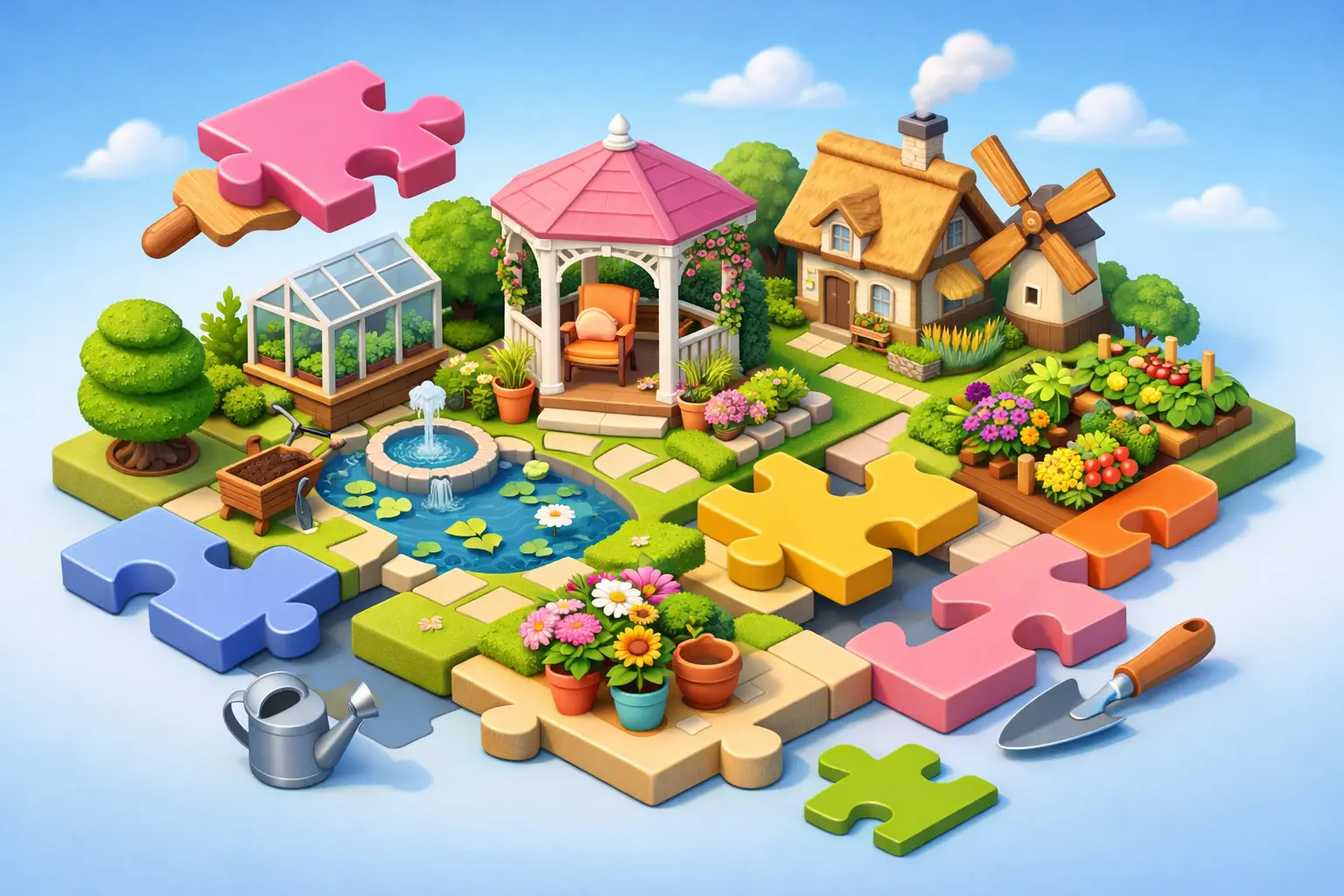
Some mobile games ask for your full attention when all you really want is ten calm minutes and a small sense of progress. That is exactly where a good garden building puzzle game earns its place. It should be easy to pick up, satisfying in short sessions, and generous enough that your time turns into something visible - a cleared board, a finished flower bed, a corner of the garden that looks more like yours.
The best games in this space understand a simple truth: relaxation is not the same as boredom. You want levels that keep your mind awake, but not so much friction that every session feels like work. You want a garden that grows steadily, but not a decorating system so fussy that it turns into a chore. And you want rewards that feel earned, not dangled in front of you like a sales pitch.
Why a garden building puzzle game works so well
Puzzle play and garden building fit together because they reward different parts of the same habit. The puzzle side gives you immediate satisfaction. You make a smart swap, line up a cascade, clear a tricky blocker, and feel the board open up. The garden side gives that progress a place to land. Instead of finishing a level and moving on, you come back to a space that reflects your effort.
That rhythm matters more than people sometimes realize. A strong match-3 level can brighten a commute or help you settle down before bed, but the long-term appeal comes from seeing your sessions add up. Three levels at lunch might earn a new path, a set of blooms, or a decorative touch that makes the next check-in feel warmer. The puzzle is the action. The garden is the memory of that action.
This is also why the theme has such staying power with adults. Gardens suggest care, patience, and visible change. They give progress a softer shape. You are not just moving through stages. You are cultivating something.
The best garden building puzzle game design starts with level feel
If the levels are flat, no amount of decorating can carry the experience. Every swap should feel clear, responsive, and worth considering. That does not mean every board has to be difficult. In fact, most players prefer a gentle flow for everyday sessions. But gentle should still feel thoughtful.
Good level design creates small decisions with real payoff. Do you clear the obstacle near the bottom and hope for a cascade, or save that move to build a power piece? Do you spend a booster early to settle the board, or hold it for the final objective? These are not dramatic choices, but they are enough to make a five-minute session feel engaging.
Variety matters just as much. A healthy puzzle game introduces new board shapes, blockers, and goals at a pace that keeps the experience fresh without forcing you to relearn the rules every few levels. When new mechanics arrive naturally, the game keeps blooming instead of piling on. You feel smarter over time, not busier.
There is also a balance to strike with challenge. Too easy, and the game turns into background noise. Too harsh, and it starts to feel stingy. The sweet spot is a steady mix: some levels you can clear while sipping coffee, some that ask for a second try, and a few that reward careful setup and smart booster timing. That range keeps momentum alive.
Building the garden should feel rewarding, not fussy
A garden feature works best when it gives you clear, visible progress with light decision-making. Most players are not looking for a full decorating simulator. They want enough choice to shape the space, enough structure to avoid decision fatigue, and enough visual payoff that each completed area feels worthwhile.
That means the best garden systems are easy to read at a glance. You finish a run of levels, return to your space, and see exactly what changed. Maybe a once-empty patch now has layered flower beds. Maybe a quiet corner has gained a fountain, a bench, or a stone path. The details matter because they make progress tangible.
Choice still plays an important role, though it depends on the player. Some people want to pick between styles and color palettes. Others are happiest when the game handles the heavy lifting and lets them enjoy the reveal. A good system respects both. It offers room for personal craft without turning each reward into a design assignment.
This is where a lot of games either overcomplicate things or make customization feel too thin. If every decoration choice is tiny and forgettable, the garden becomes wallpaper. If every choice demands too much attention, the game loses its relaxing rhythm. The best approach is measured: enough flexibility to make the garden feel personal, enough guidance to keep the process easy.
Fair rewards keep players invested longer
Adults who play mobile puzzles regularly know when a game respects their attention. You can feel it in the pacing. Rewards arrive often enough to keep your sessions pleasant, but they do not smother the core puzzle loop. Daily bonuses, collections, seasonal touches, and milestone prizes all work best when they support play rather than interrupt it.
A fair reward system has two qualities. First, it makes progress visible in concrete terms. You cleared 18 levels this week, finished a garden section, and added three new items to a collection. Second, it leaves room for player choice. A booster should feel like a helpful option, not a demand. A premium track should add comfort and cosmetics, not create a split between those who pay and those who do not.
That fairness is not just about spending. It is also about emotional tone. Players looking for a cozy puzzle habit do not want every screen to shout for attention. They want confidence, not pressure. When a game trusts that the puzzle and the garden are already satisfying, the whole experience feels calmer and more durable.
Social features help when they stay light
Not everyone wants their puzzle game to become a competition, but light social play can add warmth. A leaderboard can be fun when it gives you a small point of reference instead of a constant push. Cooperative features can be especially effective because they create connection without turning every session into a race.
That said, this is an area where it really depends on the player. Some people love checking in with a team, trading small bits of help, and sharing progress during events. Others prefer to play solo and keep the experience personal. A well-designed game leaves space for both styles. Social features should feel like a garden gate you can open, not a path you are forced to take.
Content depth matters more than constant noise
For a game to last, it needs enough handcrafted content that you do not feel like you are seeing the same idea over and over. New worlds, fresh level goals, rotating events, and collectible layers all contribute to that sense of abundance. But more content is not automatically better if it arrives as clutter.
The strongest games build depth with structure. A new themed world should feel like a change of scenery and mood, not just another background. An event should add a fresh rhythm to your week, not bury the main game under tasks. Collections should give observant players another thread to enjoy, not another box to manage.
This is one reason independent teams can sometimes create surprisingly strong experiences. When the design focus stays tight, every feature has to earn its place. If a collection system exists, it should add delight. If a co-op mode exists, it should bring people together simply. If a premium reward path exists, it should feel like support for a game you already enjoy. Garden Match Puzzles fits that approach well: straightforward match-3 play, visible garden progress, and enough layered content to keep each season feeling fresh.
How to tell if a garden building puzzle game is right for you
The easiest test is to pay attention to how you feel after a session. A good game leaves you settled and satisfied. You remember a clever move, a completed goal, a new cluster of blooms in your garden. You do not feel wrung out, pushed around, or buried under menus.
It also helps to notice what kind of progress the game emphasizes. If you enjoy short sessions, look for clear milestones and levels that respect ten-minute windows. If decoration is your favorite part, look for a garden that changes in visible ways rather than tiny incremental nudges. If you are a more experienced puzzle player, look for level design that introduces real variety and gives boosters a strategic role instead of making them feel automatic.
Most of all, look for balance. The right game gives you enough challenge to stay interested, enough reward to feel steady growth, and enough charm that returning feels pleasant rather than habitual. That balance is hard to fake. You can feel it within the first few days.
A good garden building puzzle game should leave you with something small but real each time you play - a solved problem, a calmer mind, and a garden that shows where your attention has gone.