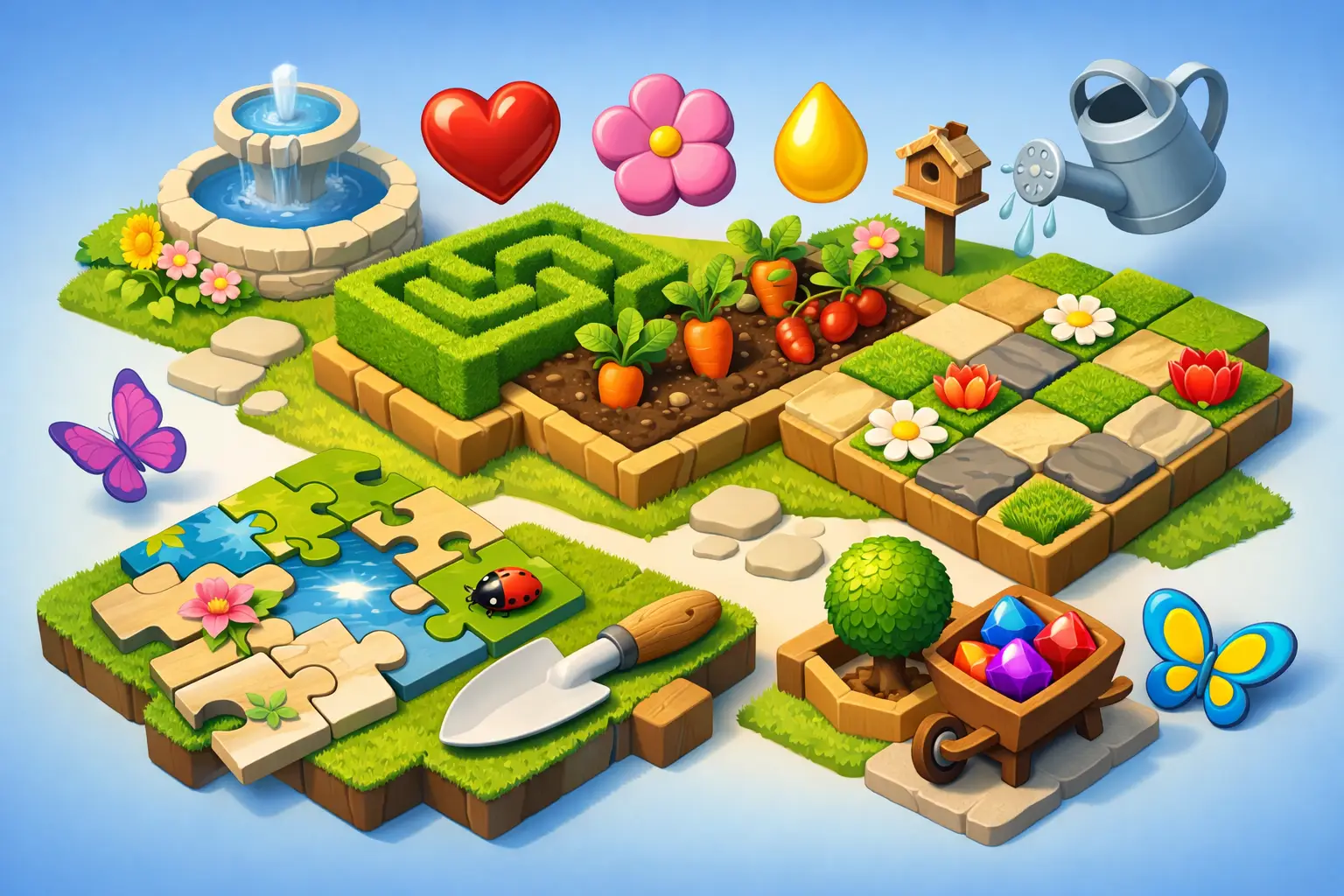
Some puzzle games help you pass ten minutes. The best ones give those ten minutes a shape - a small ritual, a little progress, a corner of calm you can return to later. That is exactly why the best garden themed puzzle games have such staying power. They pair satisfying problem-solving with visible growth, so every cleared board feels like one more bloom in a space you are slowly making your own.
For many players, that mix matters more than flashy effects or complicated systems. A garden theme works when it gives each session a sense of place. You are not just matching tiles or solving a grid. You are restoring a courtyard, collecting new flowers, opening a fresh patch of land, or bringing color back to a quiet landscape. When the design is right, the loop feels restorative instead of noisy.
What makes the best garden themed puzzle games work
A good garden puzzle game starts with readable mechanics. You should be able to open the app after a long day, understand the board in seconds, and make your first few moves without friction. The theme adds charm, but clear feedback is what keeps the experience relaxing. If a rosebud tile blooms after a smart match or a hedge clears with one well-placed booster, the game is doing its job.
The second piece is progression that feels concrete. Decorating a pergola, planting a new row of tulips, or unlocking a fresh world gives meaning to the puzzle play. Adults who play in short sessions often want to see what changed since yesterday. A strong game respects that by turning small efforts into visible results.
Then there is pacing. The best garden themed puzzle games know that five minutes and twenty minutes are both valid ways to play. One level can be a quick reset before bed. A longer session can move you through an event, a collection track, or a stretch of story. That flexibility is part of the appeal.
10 best garden themed puzzle games worth your time
1. Match-3 garden builders
This is the format most players picture first, and for good reason. Swapping adjacent pieces is instantly understandable, but the better games build real variety on top of that foundation. You might clear vines, grow flowers by matching nearby tiles, move water through channels, or crack stone planters in layers.
What separates the strong entries from the forgettable ones is level design. The board should change often enough to stay fresh, but not so often that each stage feels like homework. If you enjoy a steady rhythm of solve, decorate, collect, and repeat, this category remains the heart of the genre.
2. Merge-and-grow garden puzzlers
Merge games take a softer approach. Instead of solving a tight board in a set number of moves, you combine seeds, tools, and blooms into higher-level items. The puzzle comes from space management and planning your next chain of upgrades.
These games can be especially satisfying for players who enjoy order and visual progress. A sparse patch becoming a lush garden over time has its own appeal. The trade-off is tempo. Merge systems are usually slower and less tactical in the moment than match-3, so they suit players who want a gentler pace.
3. Hidden object games with garden restoration
Some of the most relaxing garden puzzle experiences are less about matching and more about observation. Hidden object scenes set in conservatories, backyard patios, and overgrown estates offer a different kind of calm. You search, tidy, and gradually restore the space one task at a time.
These are ideal if you like visual detail and a slower mental gear. They are not as replayable for everyone, though. Once a scene is familiar, the challenge can flatten unless the game adds rotating objectives or layered restoration systems.
4. Tile-matching garden games
Tile-match puzzlers ask you to pair identical pieces from a layered board, often with flowers, garden tools, or orchard items as the visual set. They can be wonderfully clean and meditative, especially on a tablet screen where the board has room to breathe.
The best versions balance ease with just enough pressure. Too little challenge and they become background noise. Too much clutter and the calm disappears. If you want a puzzle game that feels tidy and tactile, this category is a strong fit.
5. Jigsaw-style garden puzzle apps
Gardens and jigsaws are a natural match. Flower beds, winding paths, fountains, and greenhouse interiors all make satisfying images to assemble. Digital jigsaw apps also let you choose piece count and difficulty, which makes them easy to tailor to your mood.
This style is less about ongoing progression and more about settling into a scene. If your idea of winding down is focusing on one beautiful image rather than chasing streaks or events, jigsaw garden apps can be a great companion.
6. Garden escape room puzzlers
A few garden-themed games lean into gates, mazes, keys, statues, and hidden compartments. These puzzle adventures use the garden as a mystery setting, mixing inventory puzzles with environmental clues.
They are more narrative and less repeatable than a daily-play match game, but they offer a satisfying change of pace. Think of them as weekend puzzle games rather than something you open three times a day.
7. Crossword and word games with garden themes
Not every garden puzzle game is visual. Some use plant names, landscaping terms, and seasonal vocabulary in crosswords, word searches, or spelling challenges. If you like language games, this can be a pleasant niche.
The theme does more decorative work here than mechanical work, so your enjoyment will depend on whether you already like word puzzles. Still, for the right player, arranging letters can feel as tidy as arranging flower beds.
8. Nonogram and logic games with floral art
Logic-first players often prefer puzzles where every move comes from deduction. Nonograms, picross grids, and similar formats sometimes use flowers, leaves, and garden scenes as the reward image.
These games trade warm progression for clean mental satisfaction. You may not be restoring a terrace or planting roses, but you are still building something one careful step at a time. That can be deeply relaxing if you enjoy certainty and structure.
9. Seasonal garden event games
Some puzzle apps center their identity around spring, harvest, autumn leaves, and winter greenhouse themes. The best ones use the seasons to refresh goals, visuals, and collectible sets without making the experience feel crowded.
This format works well for players who like returning to a game throughout the year. A garden is naturally cyclical, so seasonal content feels at home here. The key is balance. Extra activities should add variety, not pull focus from the core puzzle play.
10. Full-service garden puzzle games built for daily play
This final category is where many adult mobile players land. These games combine approachable puzzles with deeper progression: decorating, collections, daily rewards, events, and light social features. When done well, every swap feels amazing because it feeds more than one goal at once. You clear a level, earn materials, open a new area, and maybe help your team along the way.
One thoughtful example is Garden Match Puzzles, which pairs hand-crafted match-3 levels with garden-building, seasonal content, and co-op play while keeping the experience easy to enter and pleasant to return to. That broader structure is often what turns a fun app into part of a weekly routine.
How to choose the right garden puzzle game for you
Start with the kind of thinking you actually enjoy. If you like quick decisions and clear feedback, choose a match-based game. If you prefer a slower planning rhythm, merge and hidden object formats may fit better. If your favorite part is arranging a beautiful space, prioritize games where decorating is more than an afterthought.
It also helps to look at how a game handles progression. Some players want a story thread or a garden that visibly changes every session. Others just want polished puzzles and a calm theme. Neither preference is better, but mixing them up can lead to disappointment. A beautiful garden skin will not make up for weak puzzle design, and excellent puzzles can feel dry if there is no satisfying sense of growth.
Session length matters too. For a commute or evening wind-down, games that support meaningful progress in five to fifteen minutes usually feel best. If a game only becomes satisfying after a long sit-down session, it may be less likely to stick.
Why the garden theme keeps coming back
Gardens give puzzle games a natural emotional rhythm. There is room for goals, but no need for noise. You can collect, restore, sort, and improve without the whole experience feeling loud or demanding. That is a big part of why this theme resonates so well with adults who want their play time to feel pleasant, not performative.
There is also something satisfying about progress you can see. A cleared level becomes a new path, a fresh bloom, a brighter fountain, a more complete corner of the world. Those details are small, but they add up. After a week of steady play, your garden looks different. So do your habits.
If you are choosing your next download, look for a game that makes each short session feel worthwhile and leaves something lovely behind when you close it. That is usually where the real staying power starts.