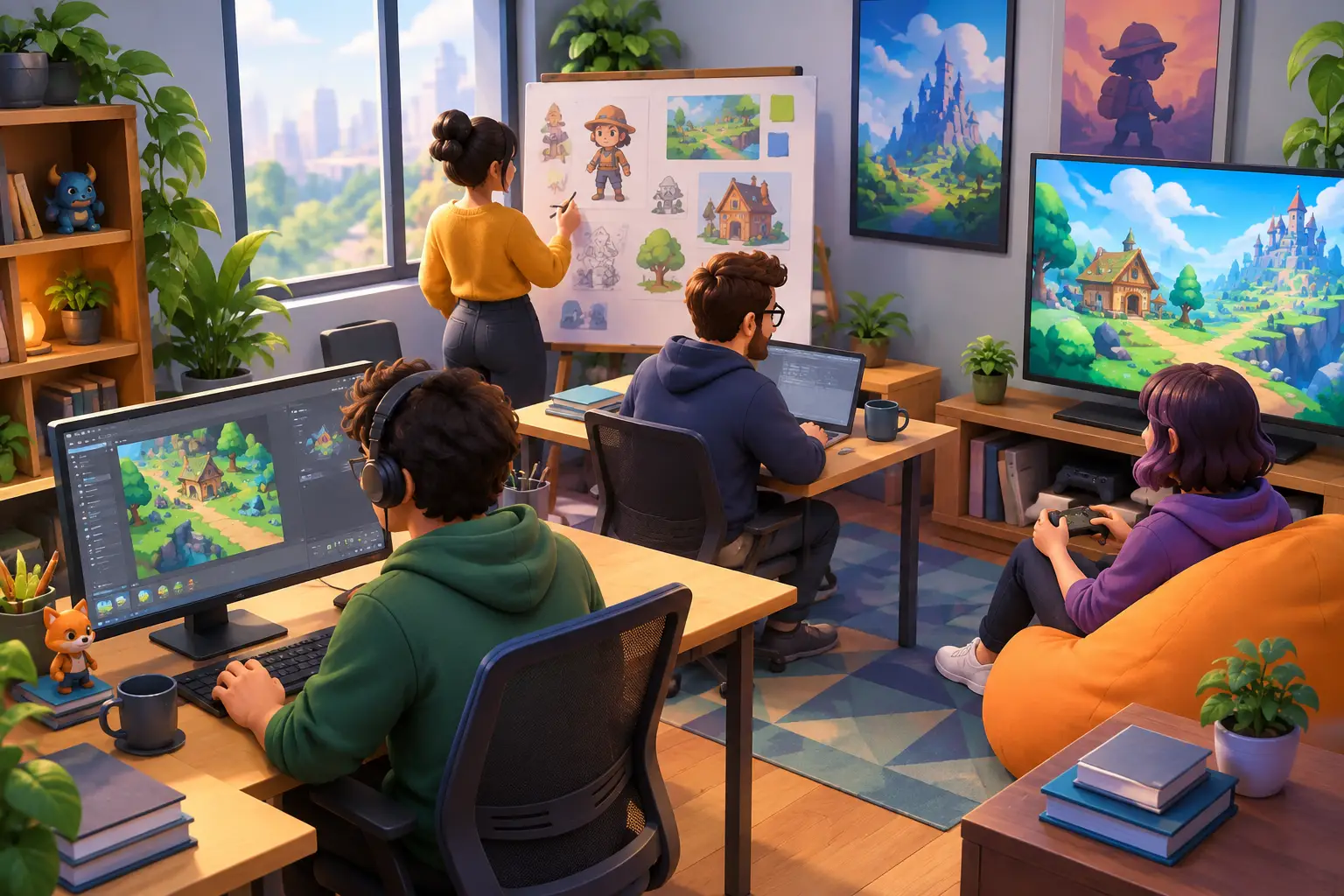
A great mobile game can fit into the quiet spaces of a day: ten minutes with coffee, a train ride home, or a little time before bed. Independent game studios often build with those moments in mind. They have the freedom to focus closely on what makes play feel satisfying, whether that is a clever level, a garden that gains a few new blooms, or a community goal completed together.
That freedom does not mean every indie game is small or simple. It means the choices behind the game can be more deliberate. For players who want a relaxing hobby with real depth, that difference is worth noticing.
What independent game studios can prioritize
An independent studio is generally a team that retains more creative control over the games it makes. The team may be compact, or it may include specialists across design, art, engineering, player support, and live events. What matters most is that the people shaping the game can stay close to its purpose and its players.
For a match-3 game, that purpose should be clear from the first swap. The board needs to be easy to read. Matches should feel crisp. A level should offer a small puzzle to solve, not a pile of distractions. Then, once the basics feel natural, the game can grow outward through gardens, collections, seasonal events, helpful boosters, and friendly co-op play.
This kind of focus is especially valuable for adults who play in short sessions. You should be able to open the game, make visible progress, and put it down feeling refreshed. A good session may mean clearing three tricky levels, earning a useful booster, or placing the final decoration in a garden corner you have been shaping over time.
Depth is not the same as complication
Some games confuse depth with a crowded screen. More buttons, more currencies, and more pop-ups do not automatically create a better hobby. In fact, they can make the first few minutes feel like work.
Thoughtful independent game studios tend to ask a more useful question: what gives this feature a place in the player’s routine? A daily reward can create a pleasant ritual. A collection can give extra meaning to the stars you earn. A seasonal event can offer a fresh objective and a new visual mood. Each piece should add another layer of enjoyment without making the core game harder to understand.
That is the balance Garden Match Puzzles aims for: depth without complexity. Its hand-crafted levels provide new puzzle ideas across themed worlds, while garden-building gives progress a personal shape. You are not simply moving through a map. You are cultivating a space that reflects the time and care you have put in.
The trade-off is real. A game built this way may introduce systems gradually rather than placing everything in front of you at once. For many players, that is a strength. You can learn one new idea, enjoy it, and return tomorrow with another small goal waiting.
Hand-crafted levels make progress feel earned
There is a special satisfaction in recognizing why a level did not work, changing your approach, and watching the board open up. Maybe the better move is to clear the lower tiles first. Maybe holding a booster for a crowded corner gives you more value. Maybe a simple match now creates a much stronger chain a few moves later.
Hand-crafted level design makes room for those decisions. It allows difficulty to rise with care, introduces new board elements at a steady pace, and gives experienced players reasons to pause and think without shutting out anyone who wants a calm, approachable game.
The goal is not to make every level difficult. It is to make every level feel considered. Some are quick wins that add color to your evening. Others ask for a second try and reward you with the pleasant click of a plan coming together.
A player-first model changes the relationship
Free-to-play games work best when the relationship is straightforward: the game is free to enjoy, and optional purchases are there for players who want extra support or faster cosmetic progress. Play should remain available whenever you are ready to return.
That approach respects the fact that a mobile game is part of a real life. Some weeks, you might clear 47 levels and redesign a whole garden section. Other weeks, a handful of quick sessions may be all you want. Both are valid ways to play.
When purchases enhance progress rather than decide whether progress is possible, players can choose what feels right for them. A booster can help with a stubborn board. A premium reward track can add an extra layer of seasonal goals. Optional currency can support the studio making the game. None of those choices should turn relaxation into pressure.
This does not mean every player wants the same experience. Some people enjoy planning resource use and chasing leaderboard positions. Others prefer decorating, collecting, and helping a co-op team meet a shared objective. A well-designed game leaves room for both, without making either style feel second best.
Community can be gentle, not demanding
Social features do not have to mean constant competition. For many players, the nicest community moments are small: sending help to a teammate, seeing a shared total climb, or celebrating a garden project someone has finished.
Co-op play works particularly well when it gives people a reason to connect without requiring a rigid schedule. You can contribute during a lunch break, offer support after dinner, or return after a few days away and still feel welcome. The best groups make progress feel shared while letting each person keep their own pace.
Leaderboards can have a place here too, especially for players who enjoy a clear short-term goal. The key is variety. A leaderboard should be one path through the game, not the only definition of success. Completing a difficult world, adding 12 new blooms to a garden, or building a helpful streak in a co-op can be just as rewarding.
Why a studio’s point of view matters
Games are made from thousands of small decisions. How many moves does a board need? Which reward arrives after a challenge? How quickly does a new garden area open? What should happen when a player returns after time away? Those choices add up to a feeling.
A studio with a clear point of view can make that feeling consistent. It can decide that the game should be inviting rather than noisy, strategic without becoming exhausting, and generous with moments of visible progress. It can listen closely when players say a level is confusing, an event is especially fun, or a decoration set deserves another season in the garden.
Creative independence does not guarantee good design. Teams still need technical skill, careful testing, reliable support, and the patience to improve a game over time. But it gives a studio room to protect the qualities that made the game worth playing in the first place.
Choosing a game that fits your routine
The right game is not necessarily the one with the most features. It is the one you are happy to return to. Look for a clear first session, levels that reward observation, progression you can see, and events that add variety without taking over your schedule.
Notice how you feel after playing. Did you solve something satisfying? Did your garden become more your own? Did a few minutes give you a genuine break? Those are better signs of a lasting game than a crowded list of promises.
A thoughtful independent studio cannot add more hours to the day, but it can make a small pocket of time feel well spent. Let your next few swaps be a chance to clear a board, tend a corner of your garden, and enjoy progress that grows at your pace.