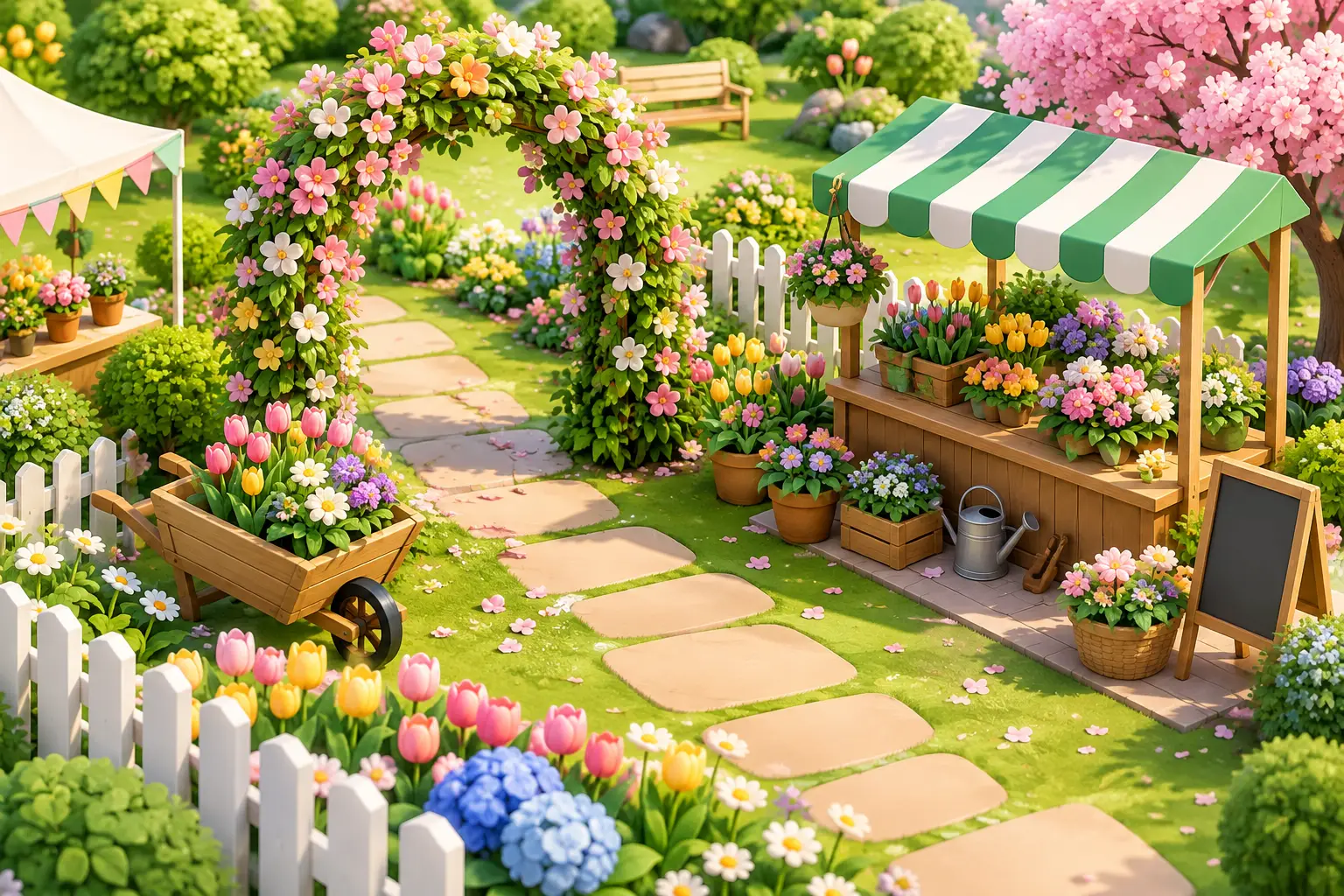
The first warm colors in a garden should feel earned: a path cleared, a corner brightened, one more flower finding its place. That is the spirit of the spring bloom season event in Garden Match Puzzles. It brings fresh goals to your familiar match-3 routine, then turns the progress you make in a few calm minutes into garden details you can keep enjoying.
This is not about racing through a checklist. It is a season for playing the levels you enjoy, making smart swaps, and watching small efforts add up to a garden with more color and character.
What Makes the Spring Bloom Season Event Special
A good seasonal event adds a little direction without asking you to relearn the game. During the spring bloom season, your regular level progress helps you gather seasonal blooms and work toward a collection of garden rewards. Every level still starts with the same clear goal: study the board, make a useful match, and create room for the moves that matter.
The difference is what happens around those wins. A striped piece that clears a row, a well-placed bomb, or a final move that completes the objective can also move your seasonal garden forward. The event gives daily play a pleasant extra layer, whether you settle in for 20 minutes after dinner or solve one thoughtful board while your coffee brews.
Spring rewards are designed to feel at home in a garden you have been shaping over time. Expect bright blooms, decorative touches, and collection progress that recognizes the work already behind your garden. The best part is that you can pursue these goals at your own pace. Play anytime, take a break when life gets busy, and return to a board that is ready when you are.
How to Build Momentum Without Rushing
The most satisfying event progress usually comes from steady, intentional play. You do not need every level to be perfect. You need to recognize what the board is offering and spend your moves where they create the most change.
Start with the level objective
Before your first swap, look at what the board actually asks you to clear or collect. It is tempting to match whatever is nearest, especially on a colorful board, but a match only helps if it opens space around the objective. If you need to clear tiles in the corners, work toward matches that reach those corners. If you need to collect a certain piece, create opportunities close to where it appears.
This simple pause can save more moves than any flashy opening. It also makes the event feel calmer. You are not just making matches. You are tending to the part of the garden that needs attention first.
Create boosters where the board is crowded
Special pieces are most useful when they have a job to do. A four-piece match can clear a line through a blocked area, while a larger match can open a stubborn section of the board. Rather than setting off a booster as soon as it appears, take a second to see whether moving it closer to the objective will produce a better result.
Combining special pieces can be especially helpful on levels with several layers to clear. It is not always the right move. Sometimes using one booster now creates the space you need for another on the next turn. That small bit of judgment is where hand-crafted levels become more rewarding: the board changes, and your plan can change with it.
Let daily rewards support your plan
Daily rewards and event bonuses are there to make a good session feel even better, not to turn play into homework. If a reward gives you a helpful booster, save it for a level where it solves a real problem. A booster used at the right moment can preserve a strong board position, clear a final obstacle, or give you the breathing room to finish a tricky objective.
Purchases can help players who want to speed up cosmetic progression or stock up on useful tools, but progress is never gated. You can always play, build your skill, and grow your garden through the levels in front of you.
A Seasonal Garden Is More Than a Reward Screen
Match-3 progress feels better when it leaves something visible behind. The spring bloom season event turns completed levels into a garden story: new petals along a walkway, a colorful accent beside a bench, or another piece added to a collection that reflects how you play.
There is no single right way to decorate. Some players enjoy a balanced garden with colors that repeat from one area to the next. Others prefer a fuller, more relaxed look, with every earned detail on display. Seasonal rewards give you new materials for both approaches without taking away the garden you have already made yours.
This is also why shorter sessions count. Clearing three levels on a quiet evening might bring you closer to the next bloom. A longer weekend session might carry you through a challenging chapter and leave you with several new pieces to place. Both kinds of progress matter because they become part of a garden you can see.
Play Together, Keep It Light
Seasonal play can be personal, but it does not have to be solitary. Co-op play lets you share a bit of the season with other gardeners, contribute to group goals, and celebrate progress without turning every session into a contest.
If leaderboards motivate you, they offer a clear view of how your event progress compares. If you would rather focus on your own garden, that works just as well. The event is built to support different play styles: a little friendly comparison for players who enjoy it, and a welcoming path for anyone who simply wants a thoughtful puzzle and a beautiful result.
A helpful co-op is especially nice during a difficult run of levels. Seeing a shared garden goal move forward can make a single cleared board feel connected to something larger. You still choose when and how to play. Your contribution is measured in real progress, not pressure.
Getting More From Each Spring Session
A strong session does not need to be long. Give yourself one clear intention before you start: clear a difficult level, earn a seasonal milestone, place a new garden detail, or simply enjoy a few boards without thinking too far ahead. That intention keeps the game relaxing while giving your play a satisfying shape.
When a level does not go your way, resist the urge to treat it as wasted time. You learned where obstacles accumulate, which areas are hard to reach, and where a booster combination could make a difference. On the next attempt, that information is part of your strategy. The garden grows through patient adjustments as much as big clears.
The spring bloom season event is at its best when it fits naturally into your day. Open the game when you have a few minutes, make the swap that changes the board, and leave with one more bloom waiting in your garden.